
In 2025, SEforALL continues to work with UN-Energy, focused on accelerating the implementation of SDG7 and advancing climate action by turning high-level ambition into concrete results—mobilizing finance, strengthening partnerships, and driving inclusive progress toward a net-zero future.
Energy Compacts are voluntary, trackable commitments that unite governments, businesses, and organizations in a shared mission: to achieve Sustainable Development Goal 7 (SDG7) and advance the global clean energy transition. Launched by UN-Energy in 2021, these Compacts serve as actionable blueprints, detailing specific, time-bound steps to accelerate progress toward universal energy access and net-zero emissions.
Launched in 2022, the Energy Compact Action Network (ECAN) serves as a global platform to match offers of support with requests for support, facilitating the implementation of Energy Compact commitments. It provides technical assistance, fosters partnerships, and monitors progress to ensure accountability and continuous improvement.
Why Energy Compacts Matter:
Bridging Ambition and Implementation: Energy Compacts translate high-level climate and energy goals into concrete actions, aligning national priorities with global objectives.
Catalyzing Investment: By providing clear, transparent targets, Energy Compacts attract significant public and private sector financing, essential for scaling clean energy solutions.
Fostering Inclusive Development: Energy Compacts prioritize equity, ensuring that the benefits of the energy transition reach all communities, including the most vulnerable.
1.6
USD 1.6 TRILLION COMMITTED TOWARD CLEAN ENERGY INITIATIVES.
308 m
PEOPLE GAINED IMPROVED ACCESS TO ELECTRICITY.
36.2 m
PEOPLE NOW HAVE ACCESS TO CLEAN COOKING TECHNOLOGIES.
338
RENEWABLE ENERGY CAPACITY INSTALLED (GW).
417
ENERGY SAVED THROUGH EFFICIENCY MEASURES (TWh).


2026: Four Years to 2030, and Accountability Matters More Than Ever
With only four years left until the 2030 deadline, the world is still off track on SDG7: 655 million people remain without electricity and 2 billion still cook with polluting fuels. Energy Compacts are not a substitute for policy, investment and international cooperation, but they offer a practical platform for turning ambition into measurable, publicly reported action. Written down, made public and reported against, each commitment is one that others can find, support, join and hold to account.
Multi-Stakeholder Energy Compacts:
Since 2021, 164 Energy Compacts have brought governments, businesses, financial institutions and civil society into a single accountability framework. The most ambitious take the form of multi-stakeholder coalitions, such as 24/7 Carbon-Free Energy, Gender and Energy, Health Facility Electrification, and Just and Inclusive Energy Transition. In each, diverse partners commit to shared principles, pool expertise and report progress together, turning individual pledges into aligned action.
Driving Broader Sustainable Development:
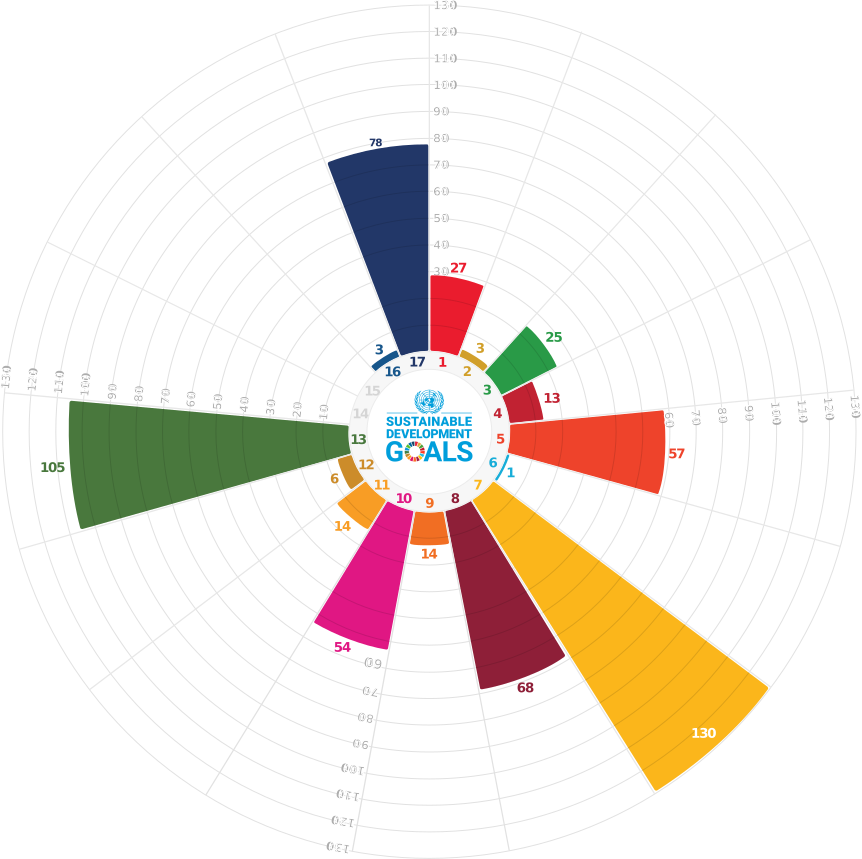
Energy Compacts contribute to multiple SDGs:
- SDG3 (Good Health and Well-being): 17,217 health facilities with improved electricity access, serving approximately 43 million people.
- SDG5 (Gender Equality): 141,961 dedicated jobs for women and 243,431 women given green jobs training. The Gender and Energy Compact has 122 signatories and has supported 30,744 women-led energy businesses.
- SDG8 (Decent Work and Economic Growth): 1.66 million green jobs created, and 837,441 people trained in green skills.
- SDG11 (Sustainable Cities and Communities): 2.9 million clean transport vehicles and around 379,000 charging and refuelling points reported.
- SDG17 (Partnerships for the Goals): 1,672 agreements signed and 8,727 events, workshops and knowledge-sharing sessions reported since 2021.
Energy Compact commitments
Energy Compacts are driving real impact across sectors and geographies. Key commitments include:
- Just Energy & Inclusive Transition: Launched under Brazil’s G20 Presidency, the JIET Compact brings together governments, multilateral institutions, and civil society to ensure clean energy transitions are equitable, affordable, and people-centered—grounded in 10 voluntary principles.
- Health Facility Electrification Compact: Electrification of 25,000 health facilities by 2025 through a multi-partner compact including USAID/Power Africa, Shell Foundation, SEforALL, UNICEF, and others.
- 24/7 Carbon-Free Energy Compact: Over 170 partners—from Google and Microsoft to governments like the USA and Kenya—are working to decarbonize power grids around the clock. See the full list of signatories here.
- National Energy Compacts: 35 countries—including India, Nigeria, Germany, Denmark, and the U.S—have submitted national Energy Compacts aligned with climate and energy goals.
- No New Coal: Sri Lanka, Germany, the UK, and others have committed to no new permits or construction for unabated coal.
- Green Hydrogen: 29 Compacts were submitted from across sectors, totalling 268 GW of new renewable energy capacity and 129 GW of new electrolyzer capacity by 2030.
- Clean Cooking: Led by the Netherlands and partners, their compact aims to deliver clean cooking for 45M people, renewable electricity for 100M, and double jobs for women and youth.
- Finance Mobilization: The U.S. committed $25B via Power Africa; while the Rockefeller and IKEA Foundations pledged $1B for distributed renewables.
- Private Sector Action: Under its compact commitment, Enel will triple renewables to 145 GW, phase out coal by 2027, and expand EV infrastructure by 2030.
For the latest updates, please see the Energy Compact Registry. All stakeholders are encouraged to develop and submit Energy Compacts at any time throughout the Decade of Action to achieve the SDGs, aligned to the 2030 Agenda and the Paris Agreement on climate change. To learn more about the Compacts submission process, click here.
Related content

Energy Compact Action Network: Unlocking Indonesia’s Clean Energy Future

UN Secretary-General issues new global roadmap to secure clean energy access for all by 2030 and net zero emissions by 2050

SEforALL and Google to launch new compact to decarbonize electricity globally

SEforALL supports Energy Compact aimed at powering 25,000 healthcare facilities with clean energy

UN High-level Dialogue on Energy

Case Study: Multilateral Energy Compact for Health Facility Electrification

Case Study Kube Energy: Clean, reliable and affordable energy in hard-to-reach and fragile area

Case Study: Malawi Energy Compact Toward Universal Access to Cleaner Cooking Solutions for All Malawian