
Universal Electricity Access by 2030: A Race of Pace
Our latest analysis of the 2026 Tracking SDG7 data finds the world still moving toward universal electricity access (SDG 7.1.1), but the pace is now slower than it was before. Behind the headline numbers is a paradox: record connections, yet an electricity access gap that has barely moved.
655 m
without electricity (2024)
89 m
gained access to electricity in 2024
11.5 m
yet the electricity access gap fell only this much
80%
Electricity access gap in just 22 countries
644 m
still projected without electricity in 2030
Increasing connections, a barely-moving gap
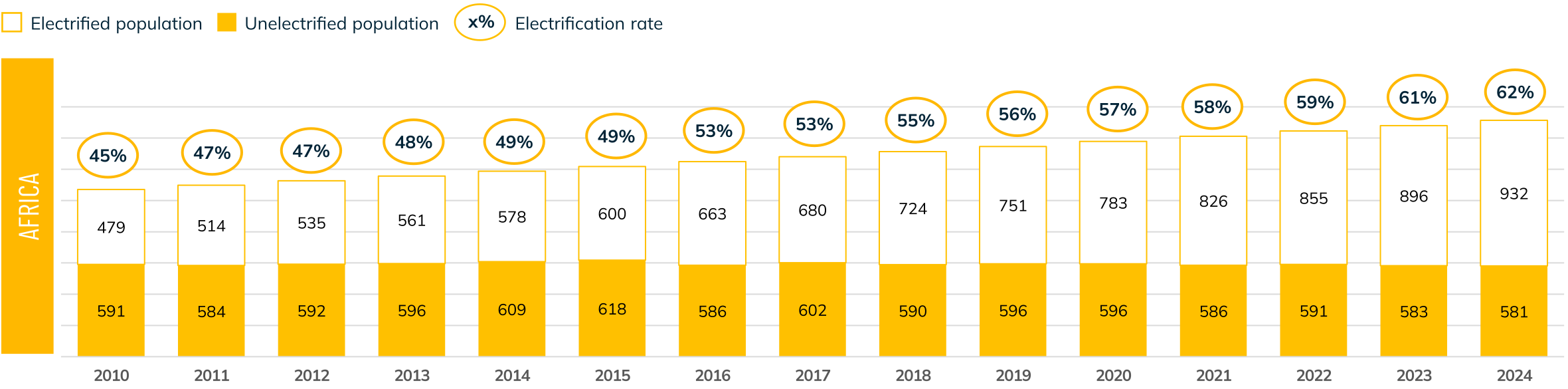
453 million. That is how many people Africa has connected to electricity since 2010 - more than the entire population of the European Union.
10 million. That is how far the number of people without power actually fell in the same time period, from 591 million to 581 million.
The distance between those two figures is the whole story. Over the same period, Africa’s population grew by 443 million. That means for every 100 people connected, growth pushed roughly 98 more into the dark. This is the population trap.
Electrified and unelectrified population (2010-2014), millions
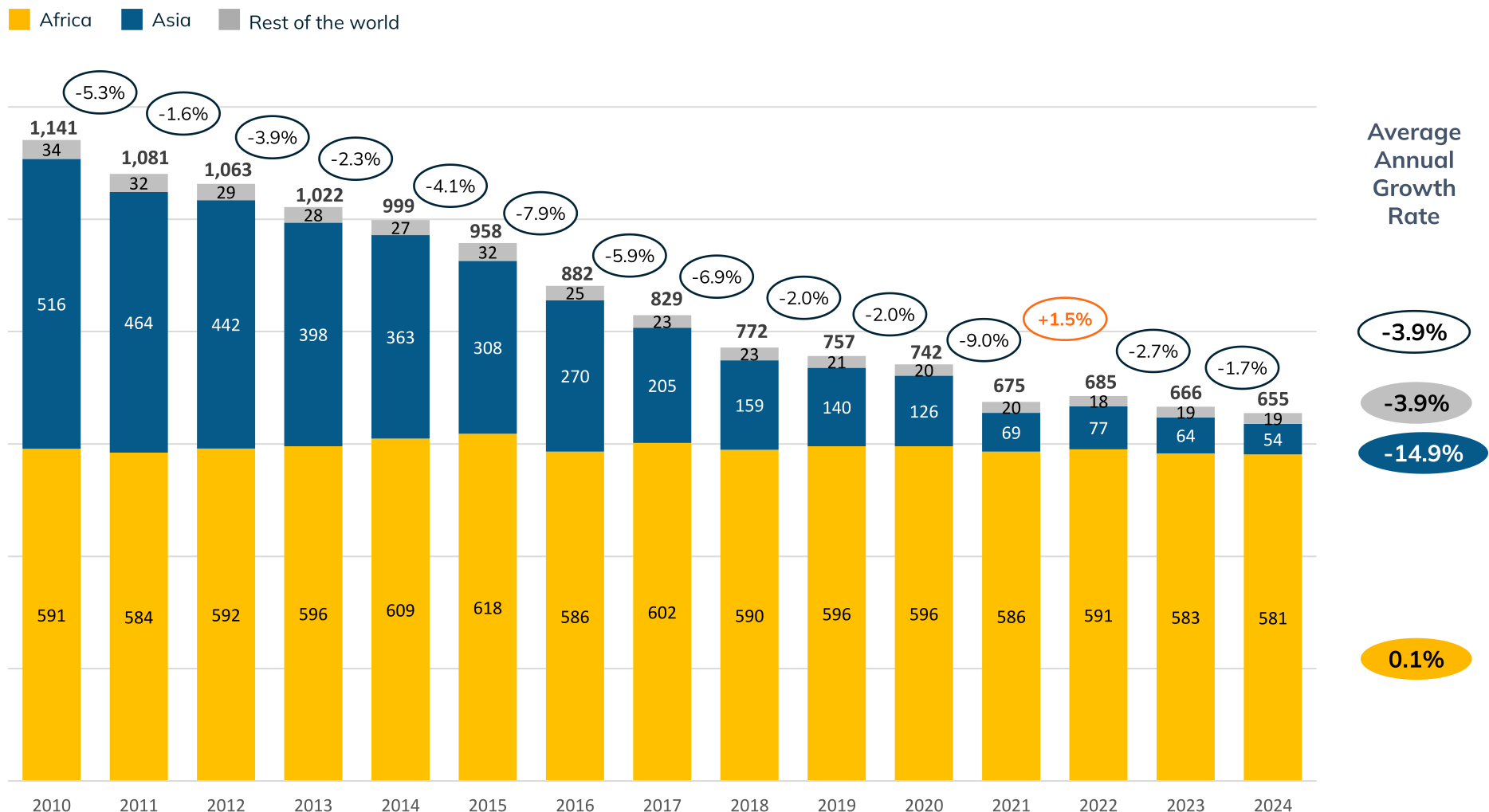
Globally, the pace is easing. In 2024, roughly 89 million people gained electricity access, yet the global deficit shrank just 1.5% (roughly 11.5 million). This is the smallest absolute reduction since 2010, excluding 2022's uptick. Progress continues, but it is slowing.
Population without electricity access, millions, 2010-2024
Three countries, one-third of the gap
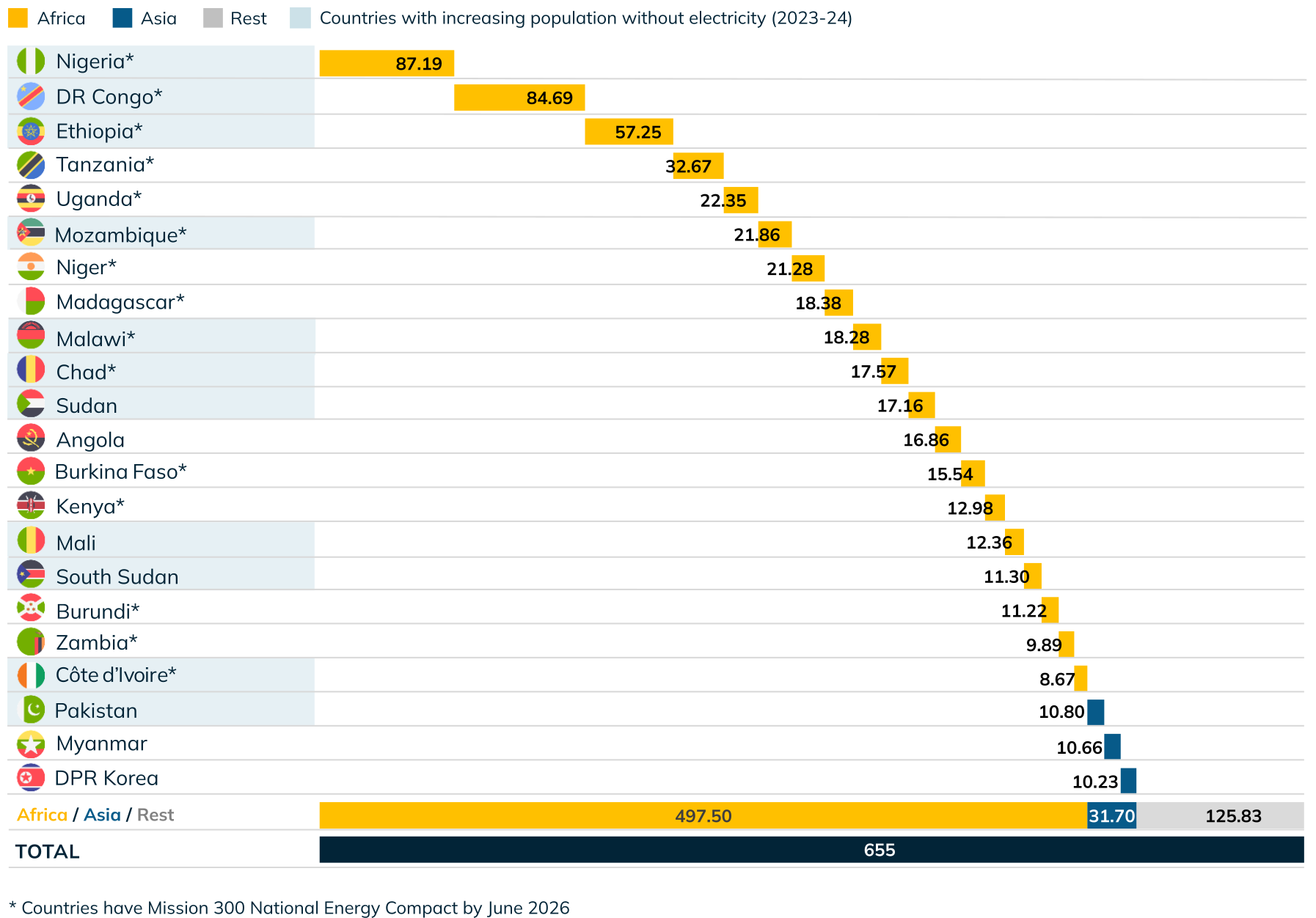
35%. Just three countries, Nigeria, the Democratic Republic of Congo and Ethiopia, account for roughly 229 million people without electricity, about a third of the entire global deficit. Widen the lens and the picture stays just as concentrated: 22 countries hold 80% of the world's unelectrified population, 19 of them in Africa. The gap is defined less by regions than by a short list of countries.
22 top-deficit countries make up 80% of the world electrification gap.
Population without electricity access, millions, 2024
Asia is nearly fully connected, not yet clean, however
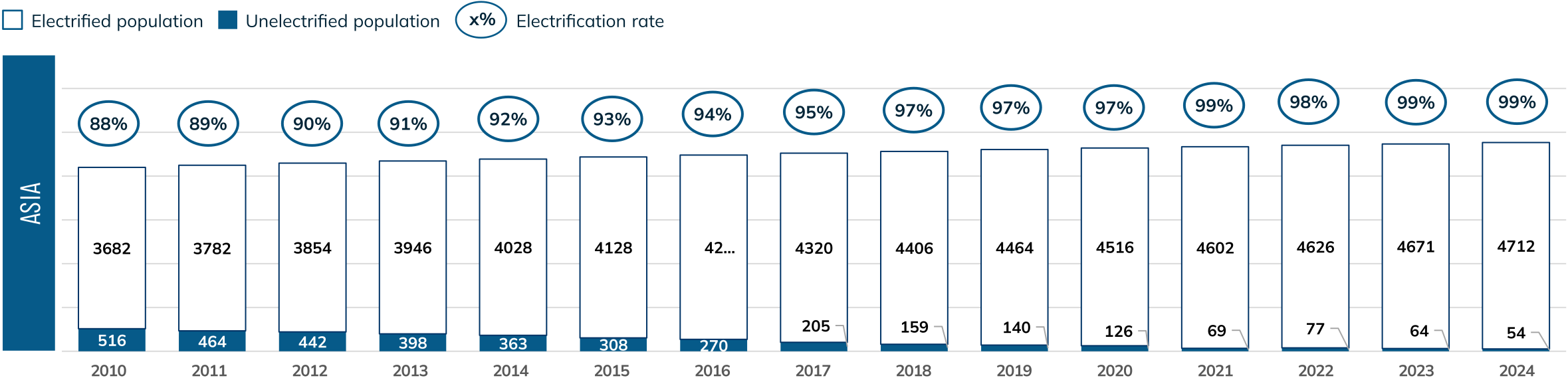
54 million. That is Asia’s entire remaining gap, down from 516 million people in 2010. Its access rate has climbed from 88% to 99%, and its share of the world’s unelectrified population has stayed below 2% for four straight years.
Electrified and unelectrified population (2010-2014), millions
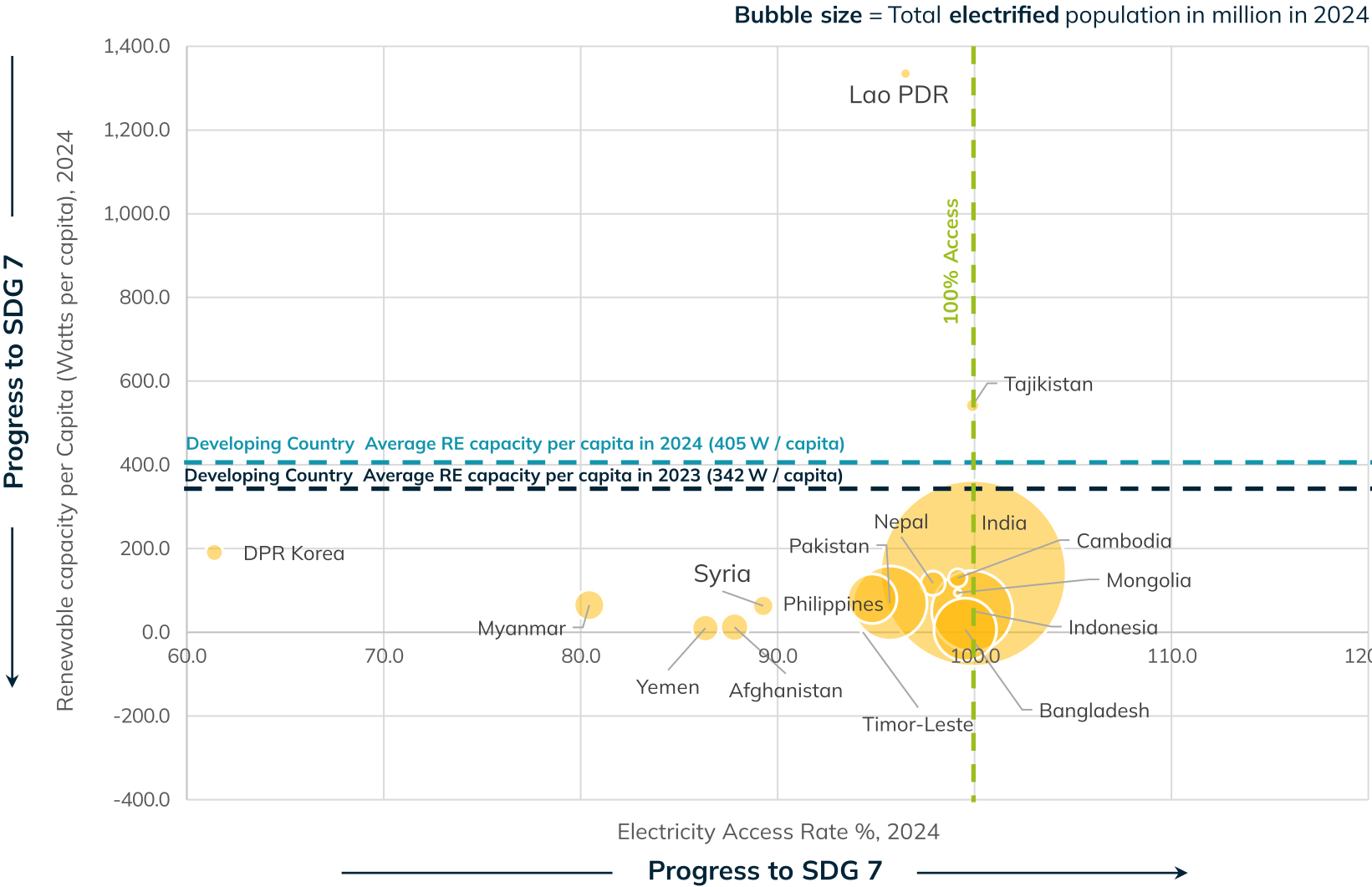
405 watts. That is the average renewable energy capacity per person across developing countries, compared to 544 watts per person globally. Almost every Asian country still short of universal electricity access sits below that line, with only Lao PDR and Tajikistan above it, signaling the last mile is being built on a thin clean energy base. As these economies grow and consume more, there must be a steady push to ensure that renewable energy meets this demand, otherwise fossil fuels will. The opportunity is to pair the final push on electricity access with a renewable energy build-out so that growing demand is powered cleanly.
Electrified population, electricity access rate, and renewable capacity per capita by country in Asia 2024
So how much faster must Africa move?
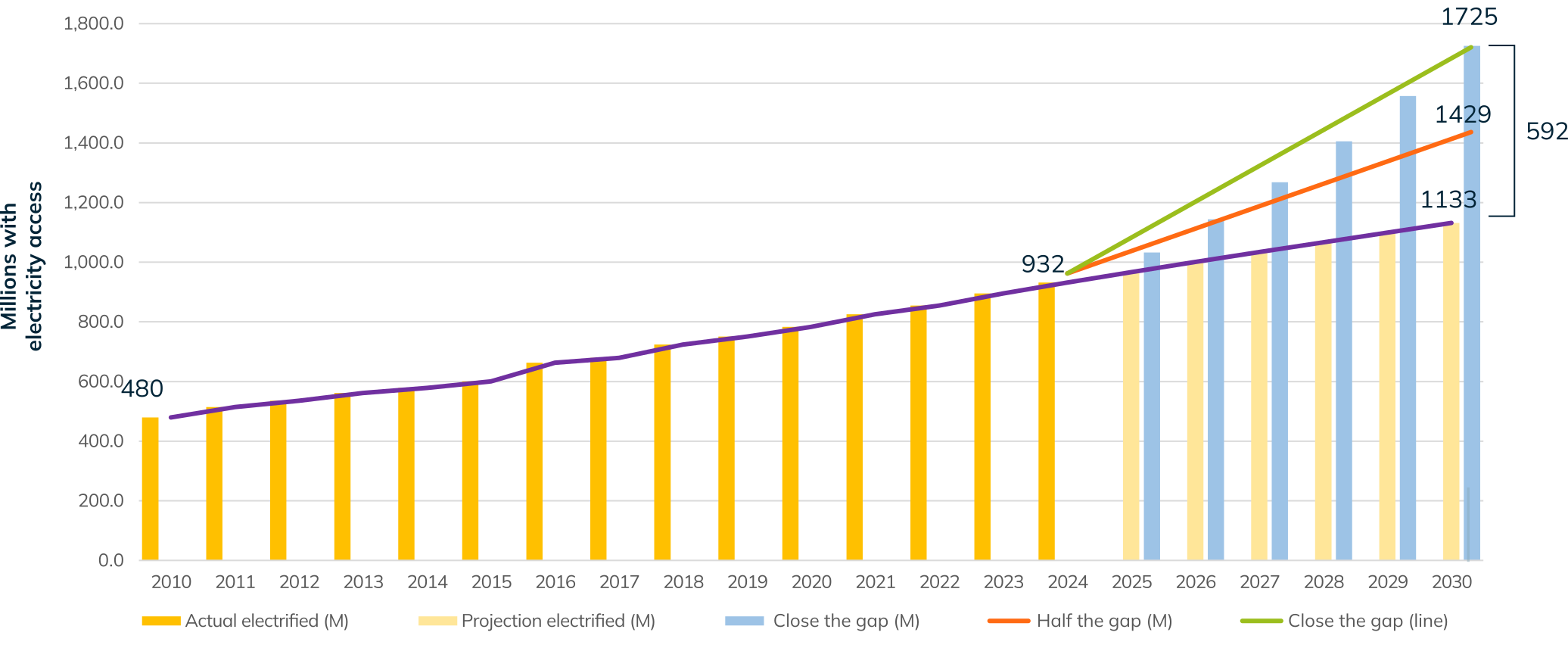
4 times faster. That's the pace needed to close the electricity access gap by 2030. Halving the gap would mean moving about 2.5 times faster than today. Africa has been adding about 34 million people to its electrified population each year over the past three years; on current population projections, here's what each goal would demand:
| Scenario | Net pace (people/yr) | vs. today | Growth needed |
| Current trend | ~34 million | — | 3.3% |
| Halve the gap | ~83 million | ~2.5× | 7.4% |
| Close the gap | ~132 million | ~4× | 10.8% |
SEforALL analysis, Tracking SDG7 2026.
Lifting Africa’s annual growth in electrified population from 3.3% to either 7.4% or 10.8% - is not a nudge to the current path, but a step change. One that needs greater finance, coordinated efforts and scaling proven technologies.
Africa’s electrified population: current trend vs halving vs closing the 2030 access gap, millions
The acceleration is already underway
50 million. That is how many people Mission 300 has connected to electricity across 40 countries till June 2026. Led by the World Bank and the African Development Bank Group, with support from SEforALL, the Rockefeller Foundation and the Global Energy Alliance, the initiative aims to connect 300 million people to electricity across Africa by 2030. It is now delivering access at nearly double the pace recorded at its start: proof that a faster trajectory is achievable, and a platform to build on exists.
The number that defines the next four years
177 million. That is how many people the world must connect every year from 2024 to reach universal access by 2030, clearing the deficit while keeping pace with population growth. Today’s trajectory runs the other way: on current trends, 644 million people worldwide (592 million of them in Africa) will still be without electricity in 2030.
Projected population without access to electricity, millions
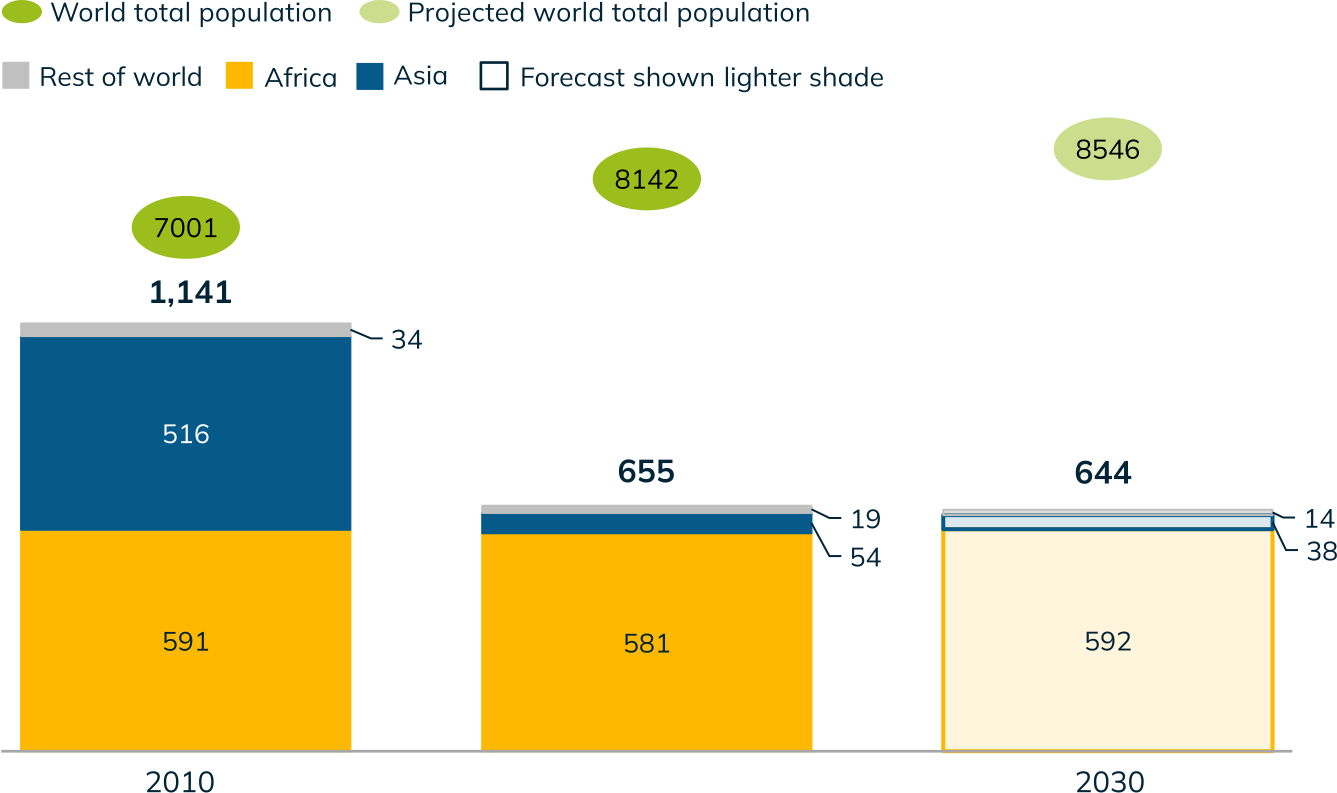
These projections are simple straight-line extrapolations of today’s trends: not a prediction of what will happen, but a description of why the pace must change.
Closing the gap now rests on three interconnected aspects:
- Pace, connecting people faster than populations grow.
- Precision, matching effort to need, concentrated in a handful of most-in-need countries.
- Clean power, pairing new electricity access with renewable energy.
And underpinning all three, leaving no one behind. Because universal access means everyone in every country.
Progress is real, but at today's pace the finish line stays out of reach. We must work to close that gap. This was always a race of pace, and the pace is ours to set.
Read our full analysis on 2026 Tracking SDG7, and join us in turning momentum into universal electricity access.
Related content


