
2025, A Defining Year for the Global Energy Agenda
2025 has been a landmark year in moving the world closer to clean and affordable energy for everyone.
At the end of 2024, the UN Decade of Sustainable Energy for All (2014–2024) was extended to 2030. The extension, adopted by the UN General Assembly, will ensure that energy remains at the core of global development efforts.
The past decade brought important progress, with more than 300 million people gaining access to electricity. Yet 666 million still live without power, and closing this gap will require directing investment to where it’s needed most so that proven solutions can be deployed at scale.
By extending the UN Decade, governments, development banks and private investors have an opportunity to invest more resources, accelerate delivery and keep building momentum needed to advance sustainable energy towards 2030 and beyond.
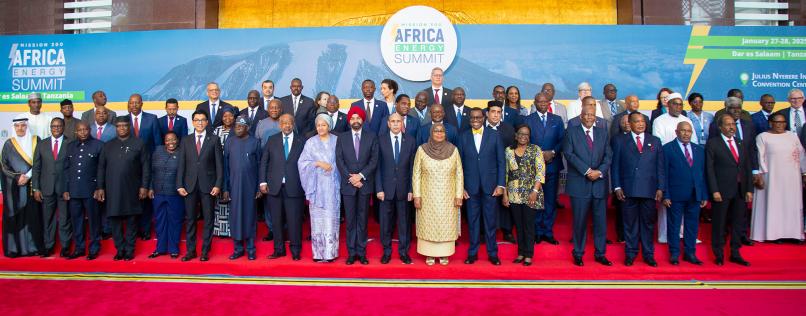
Global development leaders unite to close Africa’s energy gap
Closing the global energy gap depends on strong international cooperation, and one of the decade’s most ambitious public-private-philanthropic partnerships was recently formed. The broad coalition known as Mission 300 led by the World Bank and the African Development Bank, and supported by the Global Energy Alliance for People and Planet, The Rockefeller Foundation and SEforALL, aims to bring electricity to 300 million people in Africa by 2030.
The Mission 300 Africa Energy Summit held in January delivered three major results. African leaders agreed on a shared vision for faster electrification, while 12 countries set out detailed plans to expand energy access. International partners also pledged significant new funding for electricity connections and for helping households shift from harmful, polluting cooking methods to cleaner, safer alternatives.
During the UN General Assembly in September, an additional 17 countries unveiled their national plans towards universal energy access, signaling growing momentum towards Mission 300.
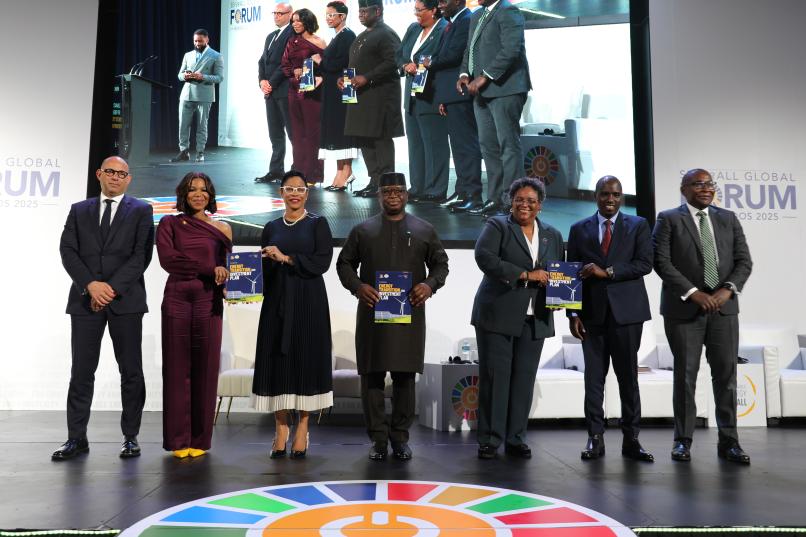
SEforALL’s Global Forum catalyzes new funding, plans and momentum
The sixth edition of the SEforALL Global Forum held in March 2025 gathered more than 900 leaders from governments, business, civil society and international organisations in Barbados to find solutions for expanding energy access. Under the theme “Sustainable Energy for Equity, Security and Prosperity,” the Forum centred on how countries can finance and implement progress.
The Forum delivered several concrete breakthroughs. It launched a new fund to expand local clean-energy solutions such as mini-grids and rooftop solar across Africa, supported countries in presenting new national plans for cleaner energy and investment and advanced reforms to make it easier and cheaper for developing countries to access capital.
In total, the Forum mobilised more than USD 500 million in commitments to expand electricity access, accelerate clean-energy deployment and help communities move away from costly, polluting energy sources.
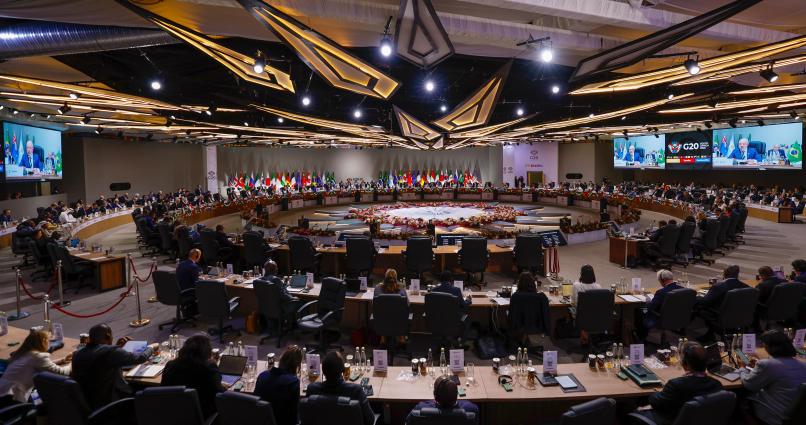
SEforALL’s role in shaping the G20’s energy-for-development agenda
As the G20 Leaders’ Summit in Johannesburg concluded in November, it was clear that energy now sits at the centre of global economic and development priorities. The South Africa Presidency further strengthened the link between energy access, energy security, jobs, investment and long-term economic stability.
G20 countries agreed to expand access to clean, modern cooking solutions and to follow up on the USD 2.2 billion pledged in 2024 for Africa’s clean energy transition. They also strengthened targets for renewable energy and energy efficiency, prioritised new power-grid links across Africa, and called for financial reforms to help developing countries invest in clean energy at a lower cost.
SEforALL has played a decisive role in driving this shift, providing continuity across successive Presidencies.
A major part of this contribution has taken place through the G20 Energy Transition Working Group (ETWG), where SEforALL has been an active partner since 2019. The ETWG is the main vehicle for G20 governments and experts to shape positions on energy access, affordability, security, efficiency, renewables, technology and finance. SEforALL’s inputs have fed directly into ministerial communiqués and, ultimately, into the Leaders’ Declaration.
COP30 and Energy’s new place in the global climate agenda
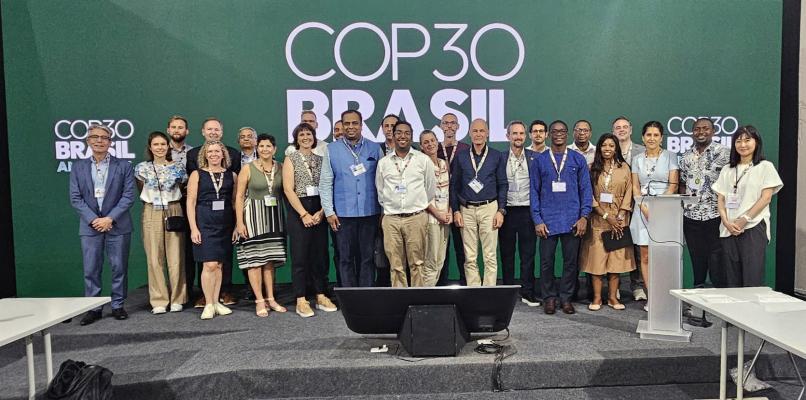
COP30 delivered historic breakthroughs. Energy played a more prominent role than at any previous COP and was, for the first time, recognised as central to climate implementation. Meanwhile, SEforALL took on three major responsibilities under the Presidency’s new action plan.
While earlier COPs addressed parts of the energy transition, COP30 is the first to unite energy access, clean cooking, energy efficiency and renewables within one coordinated delivery agenda. The Global Mutirão, COP30’s voluntary action agenda, brings together a broad coalition of partners to accelerate climate action from 2026 to 2030.
Central to Mutirão's delivery are the Plans to Accelerate Solutions (PAS), implementation roadmaps with clear targets, timelines and accountability. SEforALL worked with the COP30 Presidency and the UN Climate Champions team to develop and lead three PAS through 2030:
- The Platform for Clean Cooking in Schools in Schools was launched at COP30, linking energy and food systems transitions. Over 450 million children worldwide currently receive at least one meal a day at school, including 87 million in Sub-Saharan Africa following an increase of 20 million children since 2022. However, many of these meals are still cooked using biomass energy, for instance burning wood, making clean cooking in schools a transformative solution that improves health, the environment, and livelihoods. The Platform, led by SEforALL, brings together partners to ensure the delivery of nutritious school meals, powered by sustainable energy solutions
- Mission Efficiency launched its Plan to Accelerate Doubling Energy Efficiency, bringing together more than 30 organisations and over 50 coordinated actions. Its goal of doubling energy efficiency is essential to keep global warming below 2°C, boosting productivity, creating jobs and making energy more affordable.
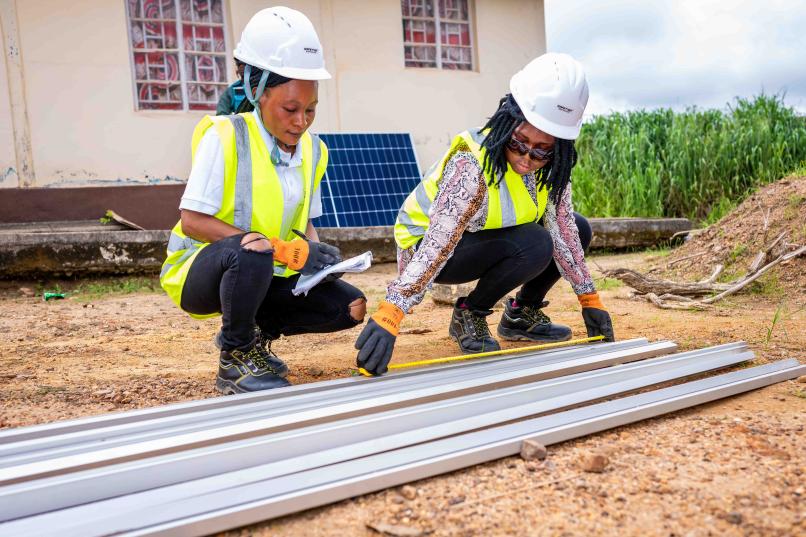
- Together with partners, SEforALL launched a new plan to speed up electricity connections and strengthen power system resilience. It aims for 51 million new connections per year by 2028 — enough to reach the 666 million people without electricity. The plan also works to make connections more reliable by strengthening grids and adding local renewables to support farms, clinics and small businesses.
Driving action toward 2030
2025 opened a new chapter for the global energy agenda. It has been a year that activated political will, unlocked major partnerships and placed energy at the centre of both development and climate action. With the renewed UN Decade, bold commitments from the G20 and COP30, and the rise of transformative initiatives like Mission 300, the world now has an unprecedented platform for progress.
SEforALL moves into the next phase with a clear purpose to turn collective ambition into real-world impact by accelerating electricity access, expanding clean cooking, scaling efficiency and renewables and directing clean energy investment to the communities that can achieve the greatest gains.
By deepening collaboration across governments, development banks, philanthropies and global partners, we are helping shape an energy future defined by opportunity, resilience and shared prosperity. The momentum built in 2025 is powerful, and with sustained commitment, the years to 2030 can become a defining period for accelerating climate action, advancing development and unlocking a new era of global prosperity.
Join us in turning commitment to ambition.
Photo credits: UNCTAD, AFDB, SEforALL
Related content


