ASEAN Energy Transition and Investment Roadmap launched at AEBF-26 to accelerate a clean, inclusive and resilient energy future
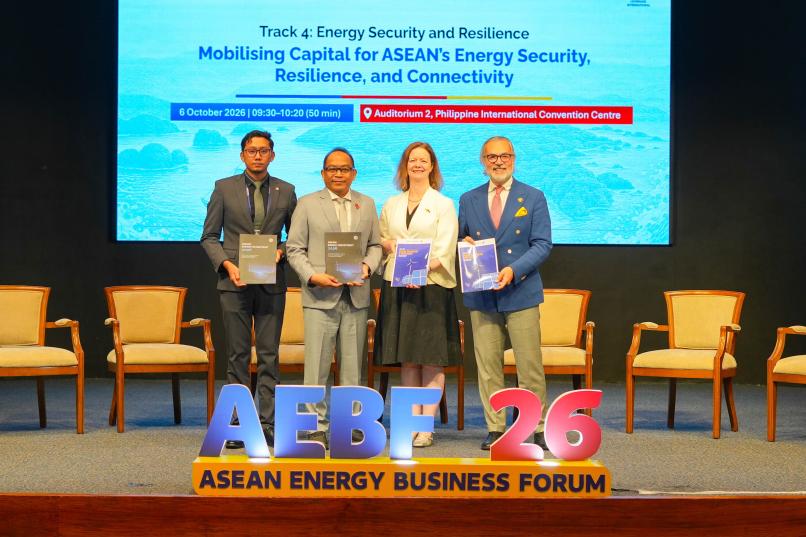
Manila, Philippines | 14 October 2026 — The ASEAN Energy Transition and Investment Roadmap (ETIR) was launched at the ASEAN Energy Business Forum (AEBF-26), providing a new regional analysis of how Southeast Asia’s energy system could evolve to meet rising energy demand while advancing the region’s long-term carbon neutrality ambitions.
ASEAN represents one of the largest and fastest growing economic regions of the world. At GBP 3 trillion, ASEAN is the world’s fifth-largest economy globally, accounting for about 3.5% of total global output. The ASEAN Strategy for Carbon Neutrality (CNS) was developed to support the region’s green transition, at the same time the ASEAN's climate ambitions are underpinned by a well-established regional energy policy architecture. The region is therefore poised to accelerate an inclusive transition towards a green economy, fostering sustainable growth and lasting climate action.
Supported by the UK Mission to ASEAN through ASEAN-UK Green Transition Fund and developed by Sustainable Energy for All (SEforALL) in close collaboration with the ASEAN Centre for Energy (ACE) and ASEAN Member States, the ETIR examines alternative pathways for ASEAN’s energy system through 2050.
The roadmap assesses pathways for ASEAN’s energy system through to 2050, focusing on the power, transport, buildings, industry and agriculture sectors, and identifying the investments, technologies, policies and regional cooperation required to deliver an inclusive and resilient energy transition.
The analysis highlights the scale of transformation that could accompany a net-zero pathway. By 2050, fossil-fuel supply under the modelled NZE pathway is around 57% lower than under BAU, while renewables could account for around 44% of total primary energy supply.
Electrification emerges as an important transition option across the economy, particularly in transport, buildings and suitable industrial processes. For harder-to-abate activities, the modelling explores more targeted roles for hydrogen, bioenergy and carbon management technologies.
The analysis also underscores the scale of investment associated with the transition. Under the modelled NZE pathway, average annual investment reaches approximately GBP 520 billion through 2050, with power and transport representing the largest shares.
Regional cooperation is another important theme emerging from the analysis. ETIR modelling indicates that greater cross-border electricity trade and interconnection could support access to diverse renewable resources, improve system flexibility and strengthen regional energy security.
These findings reinforce the potential value of continued cooperation on power-system integration alongside national transition efforts.
“The Report answers the question of how ASEAN can unlock investment and mobilise capital necessary to enhance ASEAN’s energy security, resilience, and connectivity, while facilitating the region’s energy transition. It demonstrates ACE’s ongoing commitment to supporting ASEAN Member States (AMS) in pursuing the region’s energy priorities and energy security, aligned with our regional energy blueprint, the ASEAN Plan of Action on Energy Cooperation 2026–2030 targets,” said Dato’ Ir. Ts. Razib Dawood, Executive Director of the ASEAN Centre for Energy (ACE)
The transition also presents significant economic and employment opportunities. By 2050, the NZE pathway is projected to support around 8.6 million more jobs than BAU. At the same time, the ETIR proposes targeted just-transition measures to support workers, communities and economies affected by declining fossil-fuel activity.
“This roadmap is an important step in translating ASEAN's energy transition ambitions into practical action. Delivering the transition will require significant investment, supportive policy environments and close collaboration between governments, industry and investors. The UK is proud to support this work through the ASEAN-UK Green Transition Fund, which reflects our shared commitment under the new ASEAN-UK Plan of Action to support practical, ASEAN-led solutions to the region's energy transition challenges,” said UK Ambassador to ASEAN, Helen Fazey.
“The ETIR shows that ASEAN can pursue carbon neutrality while continuing to expand energy services and industrial production. ASEAN has an extraordinary opportunity to meet its growing energy needs while building a more competitive, secure and sustainable economy. The ETIR provides a shared evidence base to help governments, investors and partners understand the choices ahead and where greater cooperation and investment can make the greatest difference. SEforALL is proud to have worked with ACE, ASEAN Member States and the UK to support this important regional conversation and help translate ambition into action,” said Damilola Ogunbiyi, the CEO and Special Representative of the UN Secretary-General for Sustainable Energy for All (SEforALL).
As ASEAN’s energy demand continues to grow, the ETIR underscores the importance of acting early to build the infrastructure, markets and enabling policy environment needed for a secure, inclusive, resilient and net-zero energy future.
Notes to Editors
About the ASEAN Centre for Energy (ACE)
The Centre fosters economic growth in the ASEAN region through multilateral energy collaborations. ACE enhances regional energy strategies with information and expertise, aligning policies with economic growth and environmental goals. It unifies ASEAN Energy Cooperation via knowledge sharing, policy advice, and capacity building. ACE offers a knowledge hub for ASEAN members through data management and supports members with research and innovative solutions. Find out more: https://aseanenergy.org/
About Sustainable Energy for All (SEforALL)
Sustainable Energy for All (SEforALL) is an international organisation, hosted by UNOPS, that partners with governments and stakeholders to accelerate sustainable energy transitions that improve lives, create jobs, strengthen economies and combat climate change. Find out more: https://www.seforall.org
About the UK Mission to ASEAN
The UK Mission to ASEAN works to deepen the partnership between the United Kingdom and the Association of Southeast Asian Nations (ASEAN). Building on the UK’s status as an ASEAN Dialogue Partner since 2021, the Mission works closely with ASEAN institutions, Member States, and UK government partners to advance shared priorities across political-security, economic, and socio-cultural cooperation. Find out more: https://www.gov.uk/world/uk-mission-to-asean
About the ASEAN–UK Green Transition Fund (GTF)
The ASEAN-UK Green Transition Fund (GTF) is the UK’s flagship programme to accelerate ASEAN’s transition to a clean and climate resilient economy by reducing emissions in key sectors, supporting green economic growth, and improving livelihoods of vulnerable people.The ASEAN-UK GTF provides technical assistance activities throughout the region, targeting all eleven ASEAN Member States (AMS). It works with ASEAN institutions, such as the ASEAN Secretariat, ASEAN Centres and Facilities, and various ASEAN Entities and Sectoral Bodies. Find out more: https://www.ukpact.co.uk/regional-fund/asean-gtf
Media Contacts:
SEforALL: Sherry Kennedy, Director of Communications: Media@SEforALL.org | +436764862425
GTF: Dinanti Arghia, ASEAN-UK GTF Fund Associate: aseangtf@ukpact.co.uk
Related content


