
UNGA 81: Funds, Grids and Farewell
UNGA 81 and Climate Week NYC 2026 signalled that with four years left until 2030, energy must be placed at the centre of development and climate action.
At the SDG Summit that marked the start of the 81st Session of the United Nations General Assembly (UNGA 81) high-level week, Secretary-General António Guterres made an appeal to the world. “We need to keep our promise to our planet. Renewable energy is now the cheapest and fastest-growing source of new power across much of the world. Countries rich in renewable resources must be given the tools and the chance to become producers of clean energy, manufacturers of clean technologies and creators of decent jobs.”
In his final General Assembly address as UN Secretary-General on 22 September, he urged all governments to adopt plans to transition away from fossil fuels in line with the 1.5-degree goal, calling on developed countries to increase support for vulnerable nations.
The next day, at the Secretary-General’s Climate Summit 2026, he sounded a note of hope. "Clean energy has gone from alternative to unstoppable," he told world leaders. He also called for renewable energy capacity to triple, energy efficiency to double, faster electrification and sharp cuts in methane emissions.
Against this backdrop, we joined governments and partners in New York for UNGA81 and Climate Week NYC 2026. Under the theme Powering the Next Decade: From Universal Energy Access to Sustainable Economic Transformation, we focused on what it takes to turn national energy plans into investment, industry and economic opportunity. We convened governments, development finance institutions, philanthropies and the private sector for a week of high-level dialogues, investment roundtables and announcements that will scale our impact.
A Milestone for Nigeria’s Off-Grid Sector
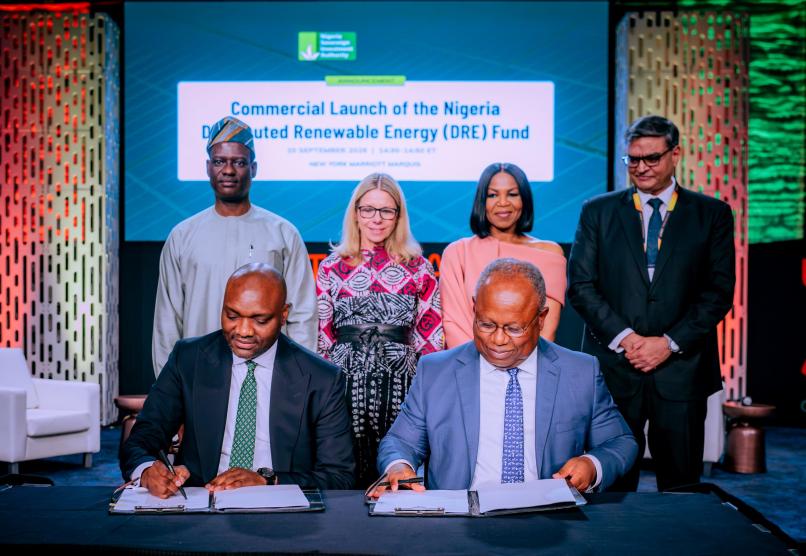
At the Global Africa Business Initiative's Unstoppable Africa on 20 September, the US$300 million Nigeria Distributed Renewable Energy (DRE) Fund reached commercial launch. Co-managed by the Nigeria Sovereign Investment Authority (NSIA) and Africa50 and supported by Sustainable Energy for All (SEforALL) and the International Solar Alliance (ISA), the fund will back distributed solutions including mini-grids and standalone solar. It creates a dedicated investment platform to scale distributed renewable energy across Nigeria, with potential lessons for other African markets.
Aminu Umar-Sadiq, Managing Director and Chief Executive Officer of NSIA, called the launch a signal that Nigeria's distributed renewable energy market is "investable, credible and ready to operate at scale." The fund also gives Mission 300, the effort to bring electricity to 300 million people in Africa by 2030, a new financing vehicle in the continent's most populous country. "What sets the Nigeria DRE Fund apart is the strength of the partnership. Together, we are turning Nigeria's energy needs into investable opportunities and building a model that can scale across Africa," said Alain Ebobissé, Group Chief Executive Officer of Africa50.
Mozambique’s Coalition to Finance its Energy Access Ambitions
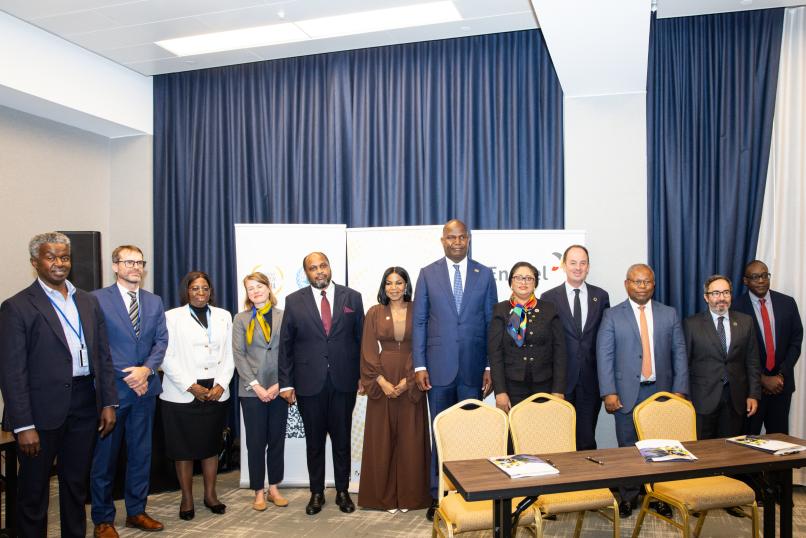
On the sidelines of UNGA 81, the Government of Mozambique announced plans to establish a Strategic Funding Coalition for Off-Grid Electrification, supported by SEforALL and Enabel, the Belgian Agency for International Cooperation.
Mozambique has already more than doubled electricity access, from 31% in 2018 to nearly 65% today and targets universal access by 2030. The coalition will bring development finance institutions, climate funds, philanthropies and private investors behind a single financing framework.
"Mozambique is putting energy at the heart of our development," said Mozambique’s President Daniel Chapo, at the event.
At the same roundtable, we signed a Letter of Intent with the Energy Fund of Mozambique (FUNAE) and Enabel to deliver the PURE Mozambique Rural Climate Project. Supported by the Green Climate Fund, the project will use solar mini-grids and productive uses of clean energy to benefit around 225,000 people, 52% of them women.
Botswana Maps its Clean Energy Future
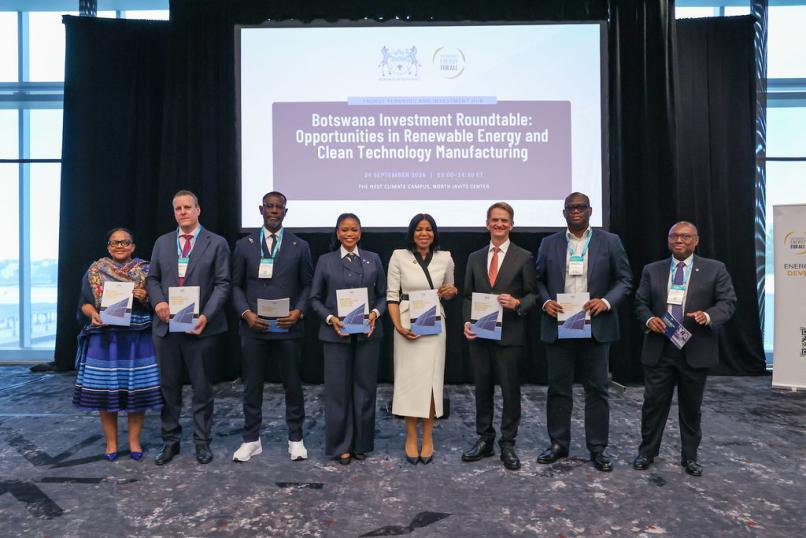
On 24 September, Botswana's Minister of Minerals and Energy, Hon. Bogolo Kenewendo, launched the Botswana National Renewable Energy Power Sector Plan and the Botswana Clean Technology Manufacturing Policy and Investment Guide, both developed with our support. The Plan sets out how the country can reach its 2030 renewable energy target, while the Guide identifies opportunities to build local value chains around solar PV manufacturing.
"These two instruments give us a practical roadmap to move from ambition to implementation, creating the policy clarity and investment opportunities needed to build a competitive renewable energy and clean technology sector in Botswana,” said Hon. Bogolo Kenewendo, Minister of Minerals and Energy, Republic of Botswana.
Five Years of Energy Compacts
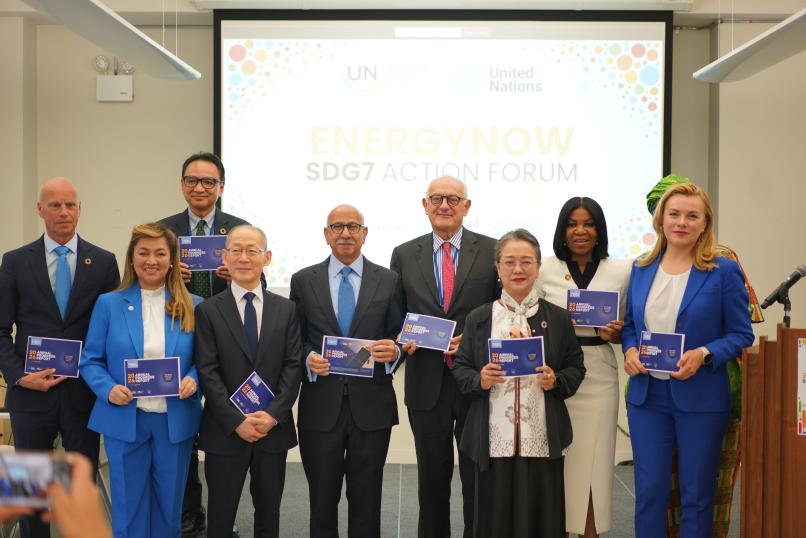
At the UN High-level Dialogue on Energy in 2021, governments and businesses began putting their energy promises on paper as Energy Compacts. On 24 September, UNDESA, UNDP, SEforALL, and partners unveiled the fifth annual account of what those promises have delivered. They have brought new or improved electricity access to 308 million people, more than the population of Indonesia.
"Over the past five years, the annual Energy Compact report has provided more than a record of commitments. It has become a valuable tool for tracking where momentum is building, where gaps persist and where greater ambition, investment and collaboration are needed,” UN Deputy Secretary-General Amina J. Mohammed said in an introductory letter.
The newest version of the Energy Compact report is equally candid about the gaps: For the 655 million people still living without electricity, that progress has yet to arrive.
Grids Take Centre Stage
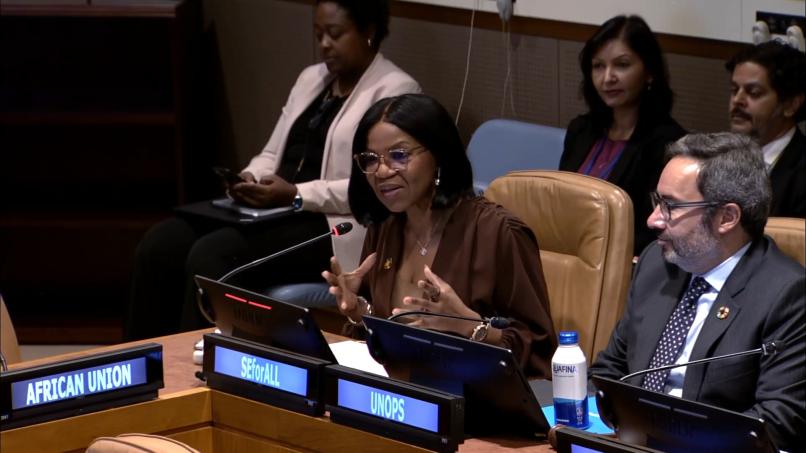
More than 2,500 gigawatts of renewable projects, nearly twice the generating capacity of the United States, are waiting in grid-connection queues worldwide. On the sidelines of UNGA 81, the Secretary-General launched the Global Grids Accelerator to help countries in Africa and Southeast Asia turn their grid priorities into investable projects. "Grids are the arteries of the energy transition," he said. SEforALL will co-convene the Accelerator with UNDP and UNOPS, building on work already underway from Mission 300 and the National Energy Compacts in Africa as well as the ASEAN Power Grid in Southeast Asia.
Damilola Ogunbiyi, CEO and Special Representative of the UN Secretary-General for SEforALL, said: “The Global Grids Accelerator is an important opportunity to bring the UN system focused on ensuring stronger and more resilient grids that are critical to expanding electricity access, integrating growing shares of clean energy and supporting economic growth and industrial development. At SEforALL, we are proud to work with partners across the UN system to help countries turn their priorities into practical action.”
Also in New York
- Impact-based carbon-free energy: We convened a founding dialogue to help shape a new Energy Compact on impact-based approaches to carbon-free energy, due to launch in 2027. The discussion explored how these approaches can better serve developing economies, given their different starting points in the energy transition.
- Better Data for Agri-Energy Investment: We explored how our decision-support tools turn geospatial, agricultural and energy data into a clearer case for agri-energy investment. Energy agencies and agricultural lenders from Nigeria and Mozambique joined investors and development partners to explore how better data can guide finance towards irrigation, cooling and processing.
- Powering Tomorrow's Women Leaders: Together with UN Women and Schneider Electric's Youth Education & Entrepreneurship Program, we co-hosted a mentorship dialogue for young women and private-sector leaders on careers in STEM and entrepreneurship. When more women lead in energy, solutions become more inclusive and better grounded in the lives of the people they serve.
- Climate Action and the Just Transition: At a High-level Event, convened by the UN Secretary-General, he called for climate finance to reach US$1.3 trillion a year by 2035, with at least USD300 billion mobilized annually for developing countries.
- A Global Push to Electrify: The COP31 President-Designate Murat Kurum launched the 35-by-35 Global Electrification Pledge, aiming for electricity to supply 35% of global final energy consumption by 2035, up from around 21% today. At the Global Renewables Summit, Electrify Now, the campaign we joined as a partner in June, took centre stage.
- Action towards the Kigali Amendment: Ten years after the Kigali Amendment, Rwanda, Brazil and the United Kingdom renewed the Friends of the Kigali Amendment coalition. Philanthropies also set a US$100 million funding goal for sustainable cooling and cuts to hydrofluorocarbons (HFCs), potent greenhouse gases used in refrigeration. Rwanda's Minister of Environment, Dr Bernadette Arakwiye, called the Amendment "one of the clearest opportunities we have to deliver significant results."
- The Nitrous Oxide Challenge: The Institute for Governance & Sustainable Development (IGSD) and the Natural Resources Defense Council (NRDC) launched the Industrial Nitrous Oxide Challenge. It calls on manufacturers to cut 10 million tonnes of CO₂-equivalent of nitrous oxide, a gas around 270 times more potent than carbon dioxide, within a year.
With four years to 2030, the urgency to close energy access gaps, transition to clean energy and greater climate action demands that we work even harder towards solutions and the transformative change needed for a more secure and resilient future for all.
We will be taking forward the conversations and solutions from UNGA81 and Climate Week NYC to COP31 later in the year.
Related content


