
A Glimpse of the Future Normal
What a record-hot week in London signalled about the year of delivery ahead.
London Climate Action Week (LCAW) 2026 produced an irony that no one missed. As the city headed towards its hottest June day on record, a session on adapting to extreme heat was postponed because the venue itself had become too hot to use. The mayor of London responded by launching Heat-Ready London, the capital's first heat plan, setting out a new approach to protecting Londoners from extreme heat.
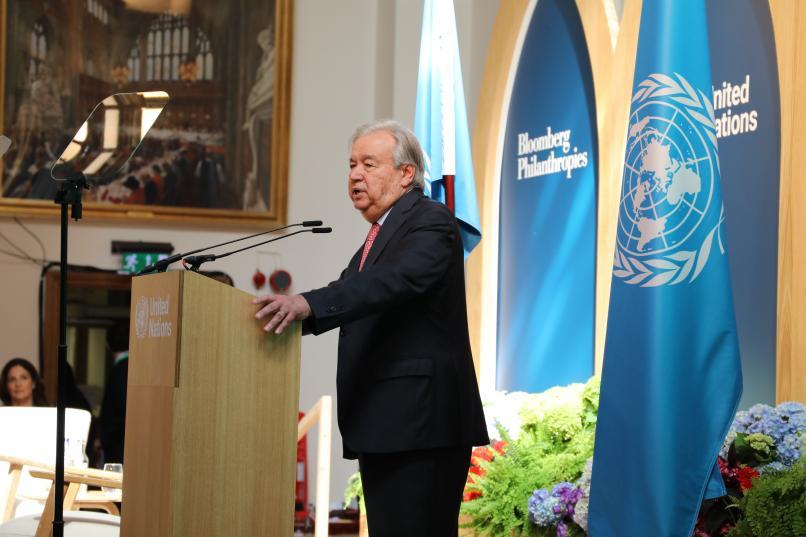
It was against this backdrop that UN Secretary-General António Guterres delivered his special address. He reminded his audience that these are now the eleven hottest years ever recorded and warned of a "Tale of Two Crises." Climate change and energy insecurity, he argued, stem from the same dependence on fossil fuels and require the same answer: a fast, fair clean energy transition backed by adaptation, resilience and climate justice. "London isn't just calling," he said. "It's cooking."
As an official Supporting Partner at this year's LCAW, Sustainable Energy for All (SEforALL) carried that focus into five Solution Hubs held across the week. Together with governments and partners, we focused on the practical work of implementation: mobilising domestic finance, strengthening strategic partnerships, decarbonising electricity grids and advancing an African-led climate agenda ahead of COP32.
We started where many of the week's conversations did: financing the energy transition. Alongside a closed-door investor roundtable on mobilising domestic capital, we signed two new partnerships. One with the European Bank for Reconstruction and Development (EBRD) to accelerate decentralised renewable energy, sustainable cooling and climate resilience across Africa and other developing economies. The other is with the Global Climate Finance Centre to strengthen climate finance capacity and engage institutional investors, beginning in Nigeria, Senegal and Ethiopia.
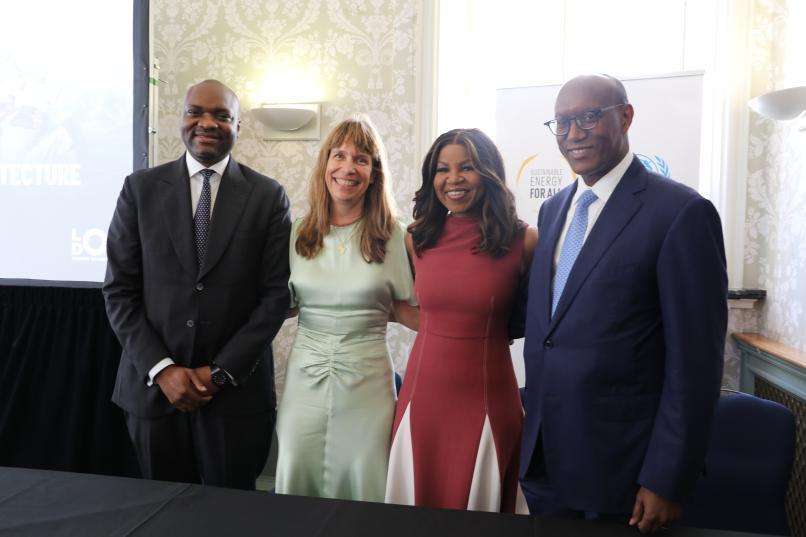
"Delivering a just energy transition at the speed and scale the world needs will require unprecedented collaboration," said Damilola Ogunbiyi, SEforALL's CEO and the UN Secretary-General's Special Representative for Sustainable Energy for All. "This partnership demonstrates what that looks like."
That collaborative spirit carried into our Partners Hub, co-hosted with the Government of Iceland, where Mission 300, the Universal Energy Facility (UEF), sustainable cooling and our work in South and Southeast Asia were presented as solutions ready to deliver at scale. The solutions exist; what scales them is finance aligned with country priorities and partners willing to deliver together. The proof was in the numbers: under Mission 300, a new way of doing business has now connected more than 50 million people to electricity.
Africa Sets the Agenda
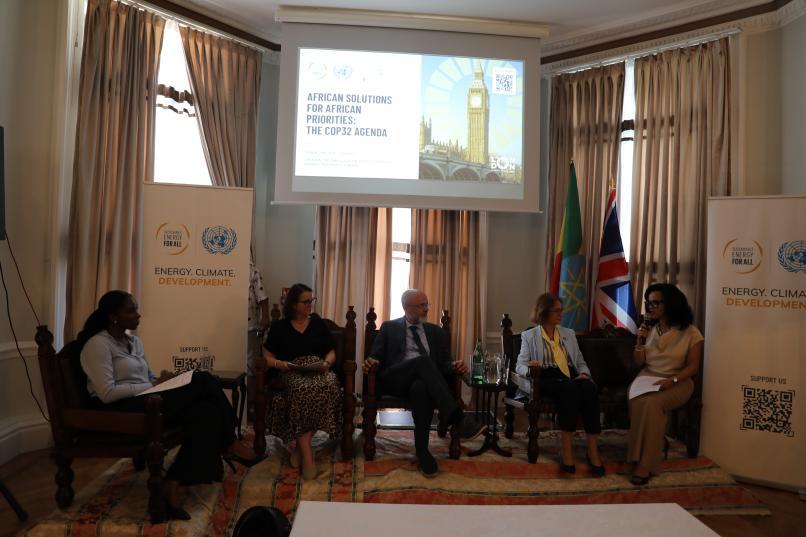
With COP32 heading to Addis Ababa, the first COP in sub-Saharan Africa since 2011, attention increasingly turned to Africa's priorities. We co-hosted the Ministerial-level event African Solutions for African Priorities: The COP32 Agenda in partnership with the Government of Ethiopia at the Embassy of Ethiopia, where the discussion reflected a broader shift: from negotiating climate ambition to financing and delivering it through green industrialisation, high-integrity carbon markets and African-led finance. That same focus carried into the Nigeria Climate Investment Summit, which brought together policymakers, investors and development partners to connect Nigeria's climate ambitions with the capital needed to deliver them.
Electrification Takes the Lead
If one idea gained momentum throughout the week, it was electrification. At the Global Energy Transition and Electrification Summit (GETES), governments, businesses and international organisations launched Electrify Now, a global campaign to accelerate renewable-powered electrification across transport, buildings and industry. SEforALL joined as a partner, supporting the campaign's goal of advancing the COP31 Presidency's target of raising electricity's share of final energy demand to 35% by 2035.
Meeting rising demand is the other side of the story. AI data centres could consume more electricity than all but five countries by 2030, ranking sixth globally in total power usage. In London, the UN Secretary-General proposed an AI Environmental Transparency Initiative, calling on major AI companies to disclose the carbon, water and land footprints of their systems and commit to powering data centres with renewable energy by 2030.
Also at London Climate Action Week
The fuller picture of the week, in brief:
- Carbon-Free Energy: We convened a session on carbon-free energy with the Carbon-Free Alliance on how corporate procurement can accelerate grid decarbonisation in emerging economies, championing the decarbonization of grids.
- From Data-to-Deal: We ended our week with a session co-hosted with Climate Compatible Growth and Imperial College London. The working session focused on turning national plans and NDCs into financeable propositions, bringing together the incoming COP31 Presidency, the World Bank, the African Development Bank and IRENA.
- Methane Call to Action: The UN Secretary-General launched a global Call to Action on Methane, outlining nine actions across fossil fuels, agriculture and waste. Canada and the EU endorsed it and called for faster implementation before COP31.
- Energy Transition Dialogue: Ahead of COP31, the IEA and the COP31 Presidency convened ministers from 20 countries. The focus: electrification, energy security and affordability, plus wider access to electricity and clean cooking.
- The Ayrton Forum: the UK extended the Ayrton Fund and its Transforming Energy Access platform, sustaining research and innovative finance for clean energy in the Global South.
- Bloomberg Philanthropies: committed US$285 million to help clean energy scale fast enough to meet surging global demand.
- Country-led finance: At the Devex Impact House, the heads of major climate funds argued that the future of climate finance is country-led.
The heat made the stakes impossible to ignore. The conversations made the next steps clearer.
We will be taking forward the conversations and proposed solutions from LCAW to the High-level Political Forum next month, UNGA81, New York Climate Week in September and COP31 later in the year.
The urgency of climate action demands that we work even harder towards solutions that deliver just and equitable energy transitions and the transformative change needed to secure a more resilient, prosperous and sustainable future for all.
Related content


