
How heat kills & who is at risk
How heat kills
Heat is a silent killer that works insidiously. It can cause a stressed heart to fail, trigger a premature birth, or quietly overwhelm an elderly person in an unventilated room. Heat kills through multiple pathways.
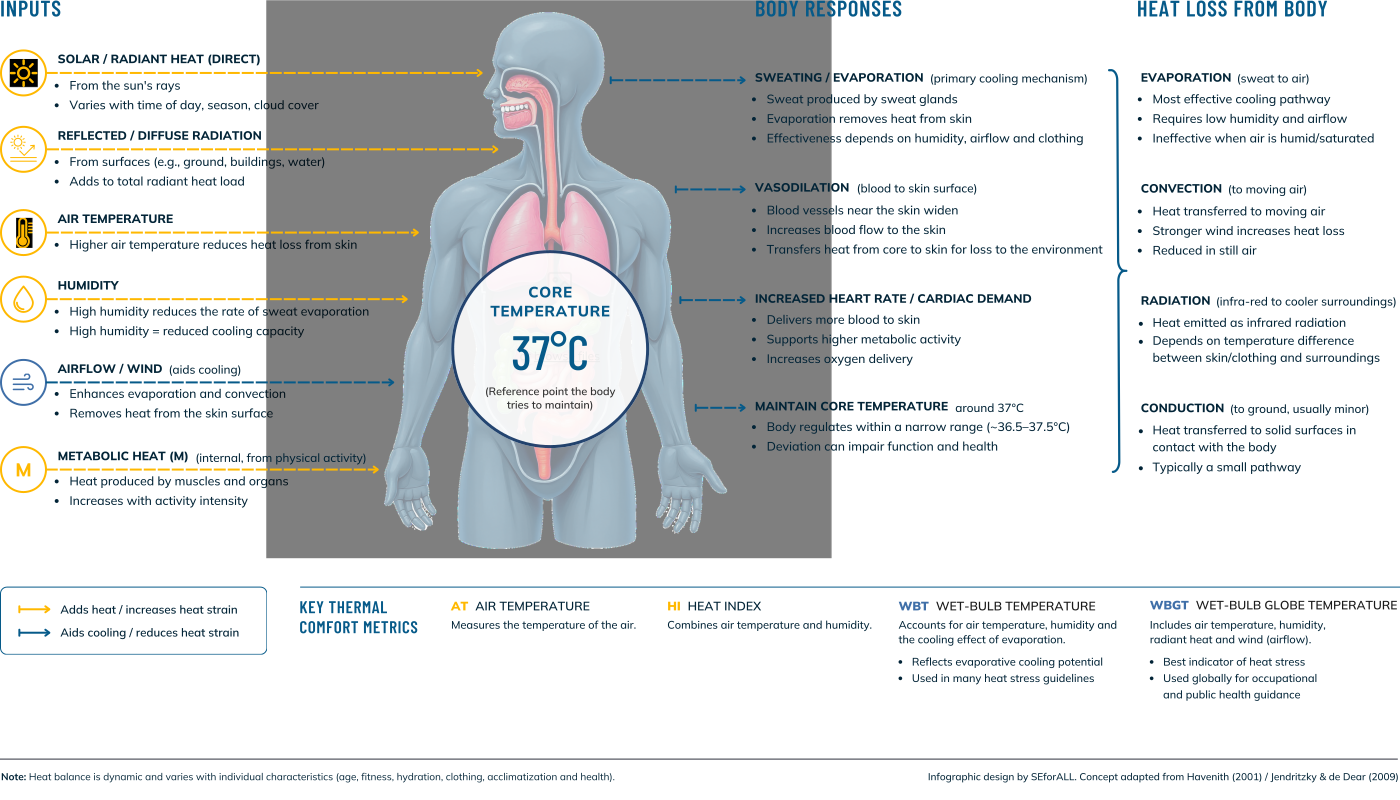
The human body maintains its core temperature within a narrow band around 37°C. When external conditions – such as air temperature, humidity, radiation, and air movement – combine with physical exertion to increase that temperature, the body deploys two primary cooling mechanisms: it dilates blood vessels to move heat toward the skin's surface, and it sweats, allowing evaporation to carry that heat away. Both responses place additional demand on the heart. Crucially, humidity determines whether sweating can actually cool: in saturated air, sweat cannot evaporate and the body's primary defence fails. This is why metrics that capture heat and humidity together are a more meaningful measure of physiological stress than air temperature alone, and why the thresholds at which the body is overwhelmed are lower, and reached more quickly, than a simple thermometer reading suggests.
FIGURE 1: The human heat balance: environmental inputs, physiological responses, and the role of humidity. Infographic design by SEforALL. Concept adapted from Havenith (2001) / Jendritzky & de Dear (2009)
Direct effects
When the body's cooling mechanisms are overwhelmed, harm follows a well-documented trajectory.[1] Heat exhaustion is characterized by weakness, nausea, dizziness, and heavy sweating, all signs of a system under acute stress. Without relief, this escalates to heat stroke, where core temperature exceeds 40°C, cellular damage accelerates, and multi-organ failure can follow rapidly. Most mortality studies capture this direct pathway, which represents the most visible end of a far wider spectrum of harm.
Pregnancy carries a distinct and compounded direct risk. High temperatures during pregnancy have been linked to hypertensive disorders, stillbirth, preterm birth and, low birth weight, with consequences for both the mother and the unborn child.[2] Where women continue working outdoors or live in unventilated dwellings throughout pregnancy, this burden is acute and one that is rarely captured in conventional mortality statistics.[3][4]
FIGURE 2: Systematic review of heat exposure impacts on maternal, fetal and neonatal health, finding overwhelmingly harmful effects.
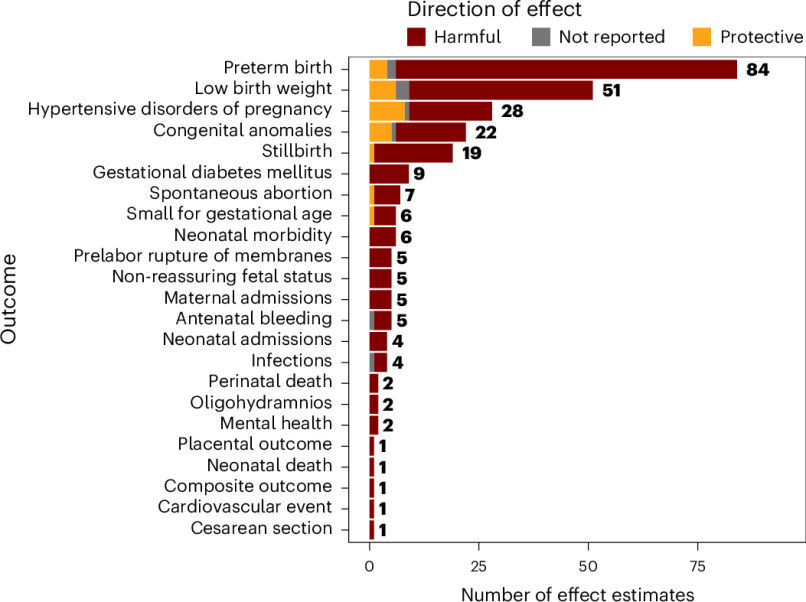
Source: Lakhoo et al. (2025). A systematic review and meta-analysis of heat exposure impacts on maternal, fetal and neonatal health. Nat Med 31, 684–694.
Sleep disruption adds a further, underappreciated direct pathway. When nighttime temperatures remain elevated, the body cannot complete the thermal recovery it depends on during rest: core temperature stays high, cardiovascular strain persists, and sleep quality deteriorates. The cumulative effect of successive hot nights compounds daytime physiological stress, particularly for the elderly and those with pre-existing conditions, and helps explain why prolonged heatwaves are disproportionately more deadly than single hot days [5][6]
FIGURE 3: Can the body recover overnight? Average monthly nighttime minimum temperatures for four cities.
Cascading effects
The greater hidden impact of heat operates through cascading physiological pathways that are largely invisible in mortality data. Cardiovascular strain can accelerate heart disease. Sustained dehydration and reduced and thickened blood flow can lead to kidney damage and heighten the risk of stroke. Heat exacerbates respiratory conditions. Because death certificates often record the terminal event, such as cardiac arrest, rather than the heat that precipitated it, death records alone obscure heat's true toll. Epidemiological approaches linking temperature and mortality provide a clearer indicator of the impact, though they remain limited by sparse death registration in many high-risk regions. These cascading effects are particularly significant in populations already carrying high burdens of chronic disease, which is the case among a large share of the adult population in South Asia and Sub Saharan Africa, where cardiovascular disease, diabetes, and chronic kidney disease are prevalent and often unmanaged.[1][8][9]
Systemic effects
The consequences of extreme heat fall most heavily on the populations of the Global South. Beyond individual physiology, heat generates wider systemic effects that are substantial in their health consequences but almost entirely absent from mortality statistics. Heat alters the disease environment: higher temperature changes can accelerate mosquito breeding cycles, intensifying malaria transmission and broadening its geographic range. It also affects food and water storage safety in ways that can drive foodborne and waterborne illness. In settings where populations already carry high infectious disease burdens, as is the case across much of Sub-Saharan Africa, these ecological effects compound the direct and cascading harm considerably, adding pathways to death that conventional heat mortality studies are structurally unable to capture.[10]
Heat also reduces productivity, resulting in lost income, food insecurity, and reduced household capacity to cope with illness. Power outages during heatwaves disable cooling systems in hospitals and care facilities at precisely the moment they are most needed. Mental health impacts such as anxiety, cognitive impairment, and the cumulative toll of sustained thermal stress are increasingly documented, but rarely appear in cause-of-death data.[11][12]
These systemic pathways represent a category of heat-related harm that is substantial, but largely beyond the reach of current mortality surveillance, and likely to remain so. The mortality figures we do have should be understood as a floor, not a ceiling, of heat's true toll on human life.
Who is at risk and why
Who dies from heat and who survives is not determined by local climate and temperature alone. Heat vulnerability emerges from the interaction of three dimensions: exposure (how much heat a person encounters, and for how long), sensitivity (how susceptible their body is to that heat), and adaptive capacity (what physical, financial, behavioural, and social resources they can draw on to cope). The same heatwave can be manageable for one person and fatal for another, and understanding why requires looking beyond physiology to the structural and social conditions that shape all three dimensions simultaneously. While this report focuses on mortality and cooling access, the same framework captures a broader spectrum of harm across hospitalization, productivity loss, complications during pregnancy and chronic disease exacerbation.
Exposure
Exposure to heat is shaped by where people live and work, and how much choice they have about when and where they spend time. Outdoor workers, including farmers, construction workers, street vendors and miners, face prolonged exposure to heat with limited ability to seek shelter. Residents of informal settlements with corrugated metal roofs and poor ventilation can face day and nighttime indoor temperatures substantially higher than ambient conditions. In many cases, indoor exposure is often more consequential than outdoor exposure because people cannot ‘leave’ the heat once they return home.; there is simply no escape from it. This particularly impacts women who are largely home -based workers or have care responsibilities and, who are therefore exposed to prolonged periods of heat inside their homes.
Climate and physiology scientists have historically used a theoretical exposure threshold to measure when heat becomes unsurvivable: a healthy human sitting in the shade with unlimited drinking water could not survive a six-hour exposure to a wet-bulb temperature of 35°C (95°F), because the body can no longer cool itself through sweating after six hours. However, a 2026 study finds the true environmental limits for human survivability are significantly cooler and drier than the previously accepted 35°C wet-bulb threshold, and people are already facing these deadly physiological limits. Figure 4 shows this comparison.
FIGURE 4: When does heat become unsurvivable? Survivability by temperature and humidity. Toggle between age groups to see how survivability thresholds change.
Sensitivity
Sensitivity varies with age health status, and physiology. The elderly face declining thermoregulatory efficiency as sweat glands become less responsive, cardiovascular reserves diminish, and thirst sensation weakens. The study behind Figure 4 emphasizes that older populations are highly vulnerable, and temperatures routinely surpass deadly physiological thresholds for the elderly well before reaching the theoretical 35°C mark. Infants and young children cannot regulate body temperature independently and depend on caregivers to remove them from danger. People with pre-existing cardiovascular disease, diabetes, chronic kidney disease, or respiratory conditions face substantially elevated risk, as heat tips already-stressed systems into crisis. Pregnancy is a distinct and compounded form of sensitivity: the cardiovascular demands of gestation leave less physiological reserve, and heat stress has been linked to hypertensive disorders, stillbirth, preterm birth, and low birth weight. Women's caregiving responsibility and pregnancy are vulnerability multipliers as they often continue unpaid care work in overheated rooms, limiting their ability to rest or access cooler temperatures.
Adaptive capacity
Adaptive capacity encompasses the structural resources available to respond to heat: timely early heat warning systems; access to shade, water, and cooling; the financial means or social safety nets to rest rather than work through the hottest hours of the day, access retrofit housing, or purchase a fan; social networks that provide welfare checks and practical support at times of limited or no income; and healthcare systems capable of treating heat illness before it becomes fatal. These resources are not evenly distributed. In many communities, households have intermittent energy supply, high tariff sensitivity, or competing priorities for electricity use, so access alone does not guarantee cooling use. A household without reliable or affordable electricity cannot run a fan. A family dependent on daily informal labour cannot afford for its breadwinners to stop working when temperatures peak. A community without a functioning healthcare facility has no recourse when heat exhaustion escalates. In the Global South, where these resource gaps are most acute, adaptive capacity is not merely constrained;, for many people it is effectively absent.
2024 was the hottest year on record, with average surface temperatures reaching 1.6°C above pre-industrial levels and climate change driving an estimated 7,142 additional heatwave days worldwide. [14][15] Over 655 million people lacked access to electricity that same year.[16] In countries experiencing both heatwaves and electricity access gaps, this means that people across over 16 billion days (about 547,000 average human lifetimes) were potentially exposed to extreme heat without the basic infrastructure for a light or a fan, let alone air -conditioning.[17]
Within whatever resource constraints they face, people adapt behaviourally physiologically, and culturally. Resting during peak hours, wearing appropriate clothing, modifying work patterns, and drawing on traditional building design and construction that embed thermal management into the built environment are all real and consequential adaptations. Physiologically, the body acclimatizes over one to two weeks of heat exposure (sweat glands activate earlier and more copiously, plasma volume expands) which is why mortality risk often rises not at the highest absolute temperatures but at the greatest departure from what a population habitually experiences. However, these responses can also include maladaptive coping mechanisms; for example, individuals may intentionally reduce water intake to avoid bathroom breaks and maintain productivity during extreme heat.
But these adaptations operate within hard limits set by resources. When temperatures exceed physiological tolerance, when poverty removes the option to rest, when electricity is unavailable, and when work cannot stop because income depends on it, individual and community responses are insufficient. Adaptation is a buffer, not a ceiling, and in the places this report examines, the buffer is thin.
Vulnerability: the convergence of all three risk factors
The clearest evidence on vulnerability comes from studying how exposure, sensitivity and adaptive capacity combine, and how differently they combine across contexts. The well -documented 1995 Chicago heatwave, which killed an estimated 700 people in five days, found vulnerability was shaped less by age or health status than by social isolation: living alone, being unmarried or widowed, and fear of opening windows in high-crime neighbourhoods meant elderly residents dramatically made up the largest number of victims. The African-American population was also disproportionately at risk. The Chicago heatwave showed that heat is as much a social phenomenon as it is a physiological one.[18]
Yet, this pattern does not transfer universally. European heatwave research finds women at greater risk from extreme heat, often older women who live alone and who have limited social connections.[19] A 2025 study in Sub-Saharan Africa found that males are more vulnerable across all heatwave types, reflecting the predominance of outdoor agricultural and construction work. [20] In South Asian cities, informal settlements without shade or reliable water place entire communities at risk, regardless of age or sex.[21] Alexandra Township in Johannesburg - a historically disadvantaged area - showed the highest heat vulnerability scores, while greener northern suburbs formed a low-vulnerability cluster, demonstrating how spatial inequality continues to shape risk today.[22] These findings illustrate that social and contextual factors affect heat mortality in ways that make direct transfer of vulnerability models across settings unreliable, and potentially dangerous.
Understanding who is at risk, and why, is conceptual ground. Turning that understanding into something a city or government can act on, e.g., a high-resolution map that shows where the highest-risk populations live, or a reliable count of how many people heat has actually killed, depends on tools that are themselves imperfect and unevenly available. The next section examines both: how vulnerability is translated into something measurable and actionable, and the broader challenge of counting heat deaths.


Notes and references
[1] Bouchama A, Knochel JP. Heat stroke. New England Journal of Medicine. 2002;346(25):1978–1988. DOI: 10.1056/NEJMra011089.
[2] Chersich MF, Pham MD, Areal A, Haghighi MM, Manyuchi A, Swift CP, Wernecke B, Robinson M, Hetem R, Boeckmann M, Hajat S; Climate Change and Heat-Health Study Group. Associations between high temperatures in pregnancy and risk of preterm birth, low birth weight, and stillbirths: systematic review and meta-analysis. BMJ. 2020 Nov 4;371:m3811. DOI: 10.1136/bmj.m3811. PMID: 33148618; PMCID: PMC7610201.
[3] Rekha S, Nalini SJ, Bhuvana S, Kanmani S, Hirst JE, Venugopal V. Heat stress and adverse pregnancy outcome: Prospective cohort study. BJOG. 2024 Apr;131(5):612–622. DOI: 10.1111/1471-0528.17680. Epub 2023 Oct 9. PMID: 37814395.
[4] World Health Organization, UNICEF, UNFPA. Protecting Maternal, Newborn and Child Health from the Impacts of Climate Change: A Call for Action. Geneva: WHO; 2023. Available at: https://www.unfpa.org/resources/protecting-maternal-newborn-and-child-health-impacts-climate-change-unfpa-unicef-who-call
[5] Effects of Heatwaves and Tropical Nights on Sleep in Middle-Aged and Older Adults: A Scoping Review. Clocks & Sleep. 2025. DOI: 10.3390/clockssleep8030037.
[6] He C, Zhu Y, Guo Y, Bachwenkizi J, Chen R, Kan H, Fawzi WW. Escalated heatwave mortality risk in sub-Saharan Africa under recent warming trend. Science Advances. 2025;11(48). DOI: 10.1126/sciadv.ady7379.
[7] 25°C: above this level sleep quality and efficiency begin to decline consistently across multiple studies (Okamoto-Mizuno and Mizuno, 2012; Obradovich et al., 2017; Haghayegh et al., 2024). 28°C: above this level cardiovascular stress during sleep rises significantly and thermal recovery is substantially impaired (Tsuzuki et al., 2025; He et al., 2025). These thresholds are indicative and vary with humidity, age, and acclimatisation.
[8] GBD Collaborative. Comparative global burden of ischaemic heart disease and myocardial disease attributable to non-optimal temperatures, 1990–2021. PLOS ONE / PMC. 2025. Available at: https://www.ncbi.nlm.nih.gov/pmc/articles/PMC12500565
[9] GBD 2021 Cardiovascular Disease Collaborators. Global burden of cardiovascular disease 1990–2022. Journal of the American College of Cardiology. 2023. Available at: https://healthdata.org/news-events/newsroom/news-releases/new-study-reveals-latest-data-global-burden-cardiovascular .
[10] Romanello M et al. The 2025 report of the Lancet Countdown on health and climate change. The Lancet. 2025. DOI: 10.1016/S0140-6736(25)01919-1. Available at: https://lancetcountdown.org/2025-report .
[11] Meadows J, Mansour A, Gatto MR, Li A, Howard A, Bentley R. Mental illness and increased vulnerability to negative health effects from extreme heat events: a systematic review. Psychiatry Research. 2024;332:115678. DOI: 10.1016/j.psychres.2023.115678.
[12] World Health Organization. Mental Health and Climate Change: Policy Brief. Geneva: WHO; 2022. Available at: https://www.who.int/publications/i/item/9789240045125
[13] Perkins-Kirkpatrick SE, Gregory CH, Vanos JK, Baldwin JW, Staudtmyer H, Guzman-Echavarria G, Jay O. Deadly heat stress conditions are already occurring. Nature Communications. 2026;17:2590. DOI: 10.1038/s41467-026-70485-1.
[14] Copernicus Climate Change Service. Surface air temperature for 2024. European Centre for Medium-Range Weather Forecasts (ECMWF); 2025. Available at: https://climate.copernicus.eu/copernicus-2024-virtually-certain-be-warmest-year-and-first-year-above-15degc .
[15] Romanello M et al. The 2025 report of the Lancet Countdown on health and climate change. The Lancet. 2025. DOI: 10.1016/S0140-6736(25)01919-1.
[16] International Energy Agency, International Renewable Energy Agency, United Nations Statistics Division, World Bank, World Health Organization. Tracking SDG 7: The Energy Progress Report 2024. World Bank; 2024. Available at: https://trackingsdg7.esmap.org .
[17] SEforALL calculation based on Romanello et al. (2025) and IEA et al. (2024).
[18] Klinenberg E. Heat Wave: A Social Autopsy of Disaster in Chicago. Chicago: University of Chicago Press; 2002.
[19] Robine JM, Cheung SLK, Le Roy S, et al. Death toll exceeded 70,000 in Europe during the summer of 2003. Comptes Rendus Biologies. 2008;331(2):171–178. DOI: 10.1016/j.crvi.2007.12.001.
[20] He C, Zhu Y, Guo Y, Bachwenkizi J, Chen R, Kan H, Fawzi WW. Escalated heatwave mortality risk in Sub-Saharan Africa under recent warming trend. Science Advances. 2025;11(48). DOI: 10.1126/sciadv.ady7379.
[21] Tuholske C, et al. Humid heat stress overlooked for one billion people in urban informal settlements. One Earth. 2024. DOI: 10.1016/j.oneear.2023.12.007. Available at: https://www.sciencedirect.com/science/article/pii/S2590332223005602
[22] Mokoena KK et al. Quantifying intra-urban socio-economic and environmental vulnerability to extreme heat events in Johannesburg, South Africa. International Journal of Biometeorology. 2025. DOI: 10.1007/s00484-025-02971-y. Available at: https://link.springer.com/article/10.1007/s00484-025-02971-y .