
Regional Cooperation Drives Progress on ASEAN’s Energy Transition Journey
The Association of Southeast Asian Nations (ASEAN) consists of 11 member states: Brunei, Cambodia, Indonesia, Laos, Malaysia, Myanmar, the Philippines, Singapore, Thailand, Vietnam, and Timor-Leste. ASEAN is now the world’s fourth-largest economy, with GDP exceeding USD 4 trillion. As the region continues to grow, energy will play a decisive role in ensuring that this growth remains secure, competitive, and aligned with its 2050 carbon neutrality ambitions.
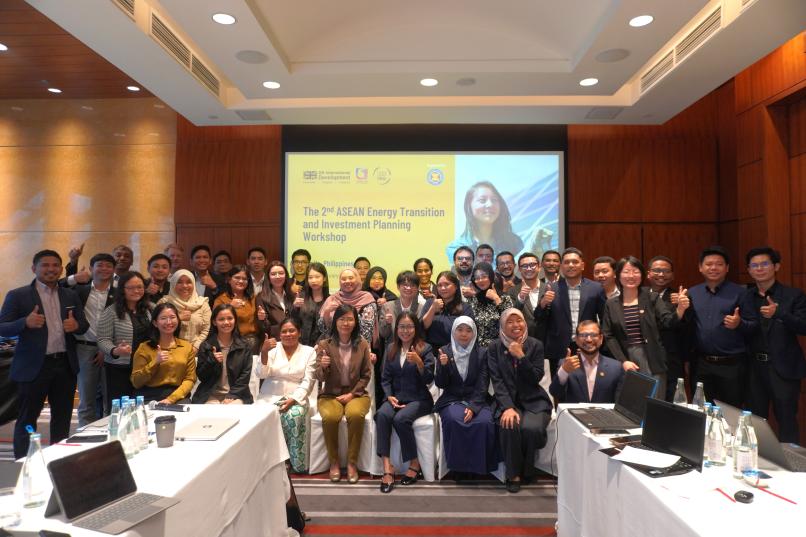
Sustainable Energy for All (SEforALL) continues to support the energy goals of this region and from 10–12 February 2026 in Manila, SEforALL in collaboration with the ASEAN Centre for Energy (ACE) and supported by the ASEAN-UK Green Transition Fund, convened 37 experts from Cambodia, Indonesia, Lao PDR, Malaysia, Myanmar, the Philippines, Thailand, and Timor-Leste — alongside representatives from five partner agencies for the 2nd ASEAN Energy Transition and Investment Planning Workshop.
Country Consultations at the Heart of the Workshop
A defining feature of the workshop was its strong emphasis on country consultations.
Regional modelling must reflect national realities. Each country has its own policy landscape, development priorities, energy mix, and constraints. For the ETIR to be credible and useful, Member States would need directly to validate the assumptions and data shaping the regional results.
Over three days, delegates engaged in structured discussions reviewing national data inputs, policy frameworks, and modelling assumptions. These consultations created space for countries to clarify data, flag inconsistencies, and ensure that projected transition pathways align with domestic plans.
This collaborative working process ensured that the roadmap is co-developed with Member States — strengthening transparency, trust, and shared ownership.
“The ASEAN ETIR helps Malaysia benchmark our clean energy pathway against the region and better understand investment needs. It strengthens evidence-based planning while ensuring our energy transition plan remains realistic, financeable and regionally aligned,” — Adzli Maher, Assistant Director, Energy Market Section, Market Regulation and Planning Division, Energy Commission (Suruhanjaya Tenaga), Malaysia.
Strengthening the Analytical Foundation and National Capacity
At its core, the workshop delivered two key outcomes.
First, participants reviewed the initial findings of the ETIR alongside its underlying input data, taking a close look at key assumptions, scenario design, and data sources. This collective validation process helped ensure that the modeled transition pathways are grounded in regional realities and aligned with national contexts. By scrutinizing both the inputs and preliminary results, Member States strengthened the technical robustness and credibility of the roadmap.
Second, the workshop strengthened national capacity to engage with advanced modelling tools. Government representatives deepened their understanding of the SEforALL Energy Systems Model (SEM) and the ASEAN ETIR Methodology, improving their ability to interpret scenario results and use evidence-based analysis to inform policy decisions.
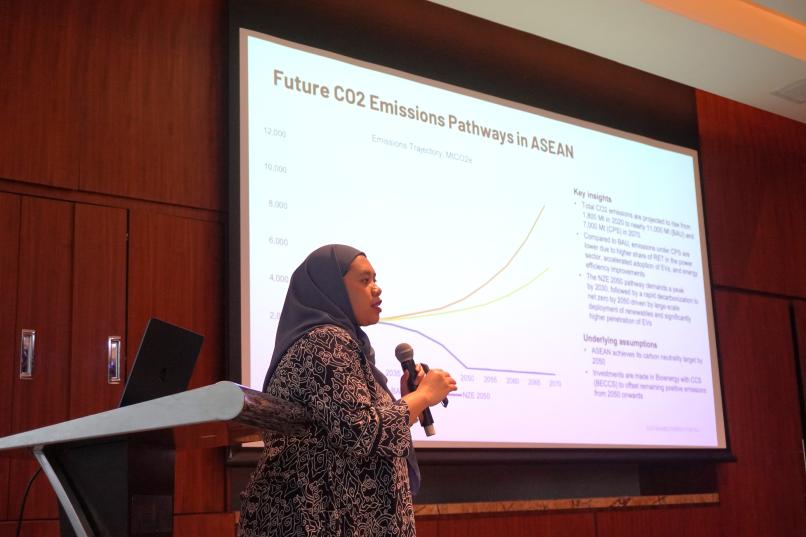
Together, these achievements ensure that the ASEAN ETIR is not only technically sound, but also supported by stronger institutional capacity across the region.
“The workshop strengthened my understanding of how to link energy transition scenarios with investment needs and financing options. It also provided valuable insights into how the ASEAN energy system may evolve beyond 2050. The concepts and approaches shared in this workshop will help inform the development of Cambodia’s future energy policies and planning. I will apply this knowledge to strengthen national energy planning, enhance coordination within the Ministry, and support strategic discussions with development partners.” — Oum Chansophea, Vice Chief of Energy Efficiency and Conservation Office, Department of Technique and Energy Business Policy, General Department of Energy, Ministry of Mines and Energy, Cambodia
Building a Stronger Foundation for Regional Cooperation
Beyond the technical outputs, the workshop reinforced ASEAN’s collaborative approach to long-term energy planning.
By jointly reviewing results, aligning methodologies, and strengthening analytical capabilities, Member States enhanced regional consistency while respecting national circumstances. The shared process improved data comparability, clarified sectoral transition dynamics, and laid the groundwork for the next phase of refinement.
“Regional collaboration strengthens energy security and helps countries address common challenges such as renewable integration, transmission expansion, and market readiness.” — Ronalene C. Sianen, Electric Power Industry Management Bureau, Science Research Specialist, the Philippines
As the ASEAN ETIR moves toward finalisation in 2026, the progress made in Manila provides a stronger, more credible foundation for coordinated regional action.
Through sustained collaboration and country-led engagement ASEAN is demonstrating that effective regional cooperation — grounded in shared evidence and collective ownership — is central to delivering a just and investment-ready energy transition.