
Powering Progress: 7 Opportunities to Close the Energy Access Gap and Accelerate the Clean Energy Transition Now
Energy Compact Action Network: Unlocking Indonesia’s Clean Energy Future
Indonesia’s Energy Compact: Clear Targets, Significant Opportunity
Indonesia’s Energy Compact sets out measurable and time-bound goals to drive its clean energy transition. Its key commitments include:
- Renewable Energy: Grow the share of renewables in total primary energy from 12.3% in 2022 to 23% by 2029.
- Solar & wind: Scale from 0.4 GW to 5.3 GW by 2029—a twelvefold increase.
- Energy Efficiency: Reduce intensity from 133.9 SBM/Mil Rp to 125.96 SBM/Mil Rp by 2030.
- Emissions Control: Cap emissions at 446 MtCO₂e annually by 2030, compared to a business-as-usual projection of 596 MtCO₂e
- Investment Needs: Mobilize IDR 4,000 trillion (USD 272.7 billion) to meet 2030 energy transition goals.
(Source: Indonesia Energy Compact 2024)
These targets are not merely symbolic—they represent the scale of change required to meet Indonesia’s national development and climate goals. Delivering on them requires the alignment of capital, policy, technology, and project pipelines. That’s where ECAN stepped in.
Energy Compacts Finance Roundtable, Indonesia
In November 2024, SEforALL partnered with Badan Perencanaan Pembangunan Nasional (BAPPENAS), Indonesia’s Ministry of National Development Planning, to host the ECAN Finance Roundtable in Jakarta. This convening marked a key moment in converting policy ambition into investment-ready action. Senior representatives from Indonesia’s government ministries, development finance institutions, clean energy developers, utilities, technology providers, and private investors—from national to global levels—gathered to drive investment into Indonesia’s clean energy priorities.
What distinguishes ECAN is its integrated support model—combining matchmaking, capacity building, and progress tracking in a single global platform. This was translated into the event’s primary focus— to align investment strategies with Indonesia’s Energy Compact targets, particularly in accelerating small- and medium-scale renewable energy deployment. The urgency of this effort is underscored by Indonesia’s current climate finance gap. At the moment, public financial institutions contribute around USD 3.5 billion annually, primarily focused on renewable energy, while private institutions invest about USD 3.4 billion—yet only 3% of this goes to climate-aligned sectors, mainly in sustainable agriculture. According to CPI’s Climate Finance Assessment, Indonesia’s climate finance flows need to scale by 4.5 times to meet its 2030 targets—requiring a substantial increase in private sector contributions. ECAN’s role in facilitating investor–government matchmaking and de-risking tools provides a structured approach to closing this gap.
Indonesia’s engagement with ECAN has been jointly led by two key institutions— BAPPENAS and the Ministry of Energy and Mineral Resources of the Republic of Indonesia (Kementerian Energi dan Sumber Daya Mineral, or MEMR)—whose complementary mandates are central to the country’s clean energy transformation. BAPPENAS plays a strategic role in formulating long-term national development plans, aligning policies with sustainability and carbon reduction goals, coordinating investment priorities, and fostering international partnerships. MEMR, as the primary regulatory body for the energy sector, is responsible for implementing energy policies, managing licensing and compliance for energy projects, promoting energy efficiency, and accelerating the deployment of renewable technologies. Their joint leadership within ECAN reflects Indonesia’s whole-of-government approach—ensuring that clean energy ambitions are underpinned by robust planning, effective regulation, and coordinated investment frameworks.
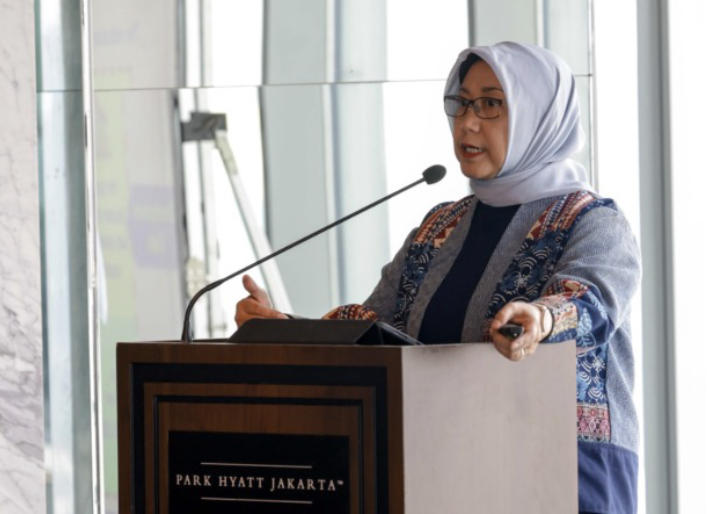
“Indonesia needs to continue to encourage this. We cannot just run business as usual. Climate change, reducing gas emissions are game changers to encourage Indonesia's growth. Investment for the green transition requires costs of up to USD 51.6 billion per year, which is obtained not only from government financing but also from the private sector.” former Deputy Minister for Maritime and Natural Resources at Indonesia’s Ministry of National Development Planning/BAPPENAS, during the ECAN Finance Roundtable in Indonesia.
Key outcomes included:
- Six thematic clusters were identified for follow-up engagement- Financing transmission infrastructure for renewable energy evacuation; Replacement of diesel gensets with solar rooftop for last-mile access; Revisiting ESG mandates in financing PLN (Perusahaan Listrik Negara) and Pertamina; Strategies for reducing currency risk; Governance structures for clean energy finance under the newly elected administration; and Data challenges and tracking new renewable energy projects.
- Aligning action with upcoming SEforALL initiative focussed on financing approaches and ownership models for last-mile access including blended-finance and results-based models.
- Identifying modes of engagement under ECAN with national actors including BAPPENAS, MEMR, JETP Secretariat, state-owned enterprises, national investors and other on-going initiatives.
These discussions mark the beginning of a coordinated, multi-stakeholder implementation phase that will support Indonesia’s decarbonization and electrification goals. You can read more about the roundtable here.
Partnerships for Possibility: Scaling Impact Through Collective Action
Indonesia’s progress demonstrates what is achievable when national ambition is paired with structured global support. Through ECAN, political will is transformed into practical outcomes—by connecting governments with the resources, financing, and partnerships needed to turn plans into progress.
Yet, delivering a just and sustainable energy future demands more than a single success story. It requires continued leadership, cross-sector collaboration, and bold action at scale. Governments around the world are encouraged to submit or update their Energy Compacts, using ECAN’s tailored support to align national priorities with global financing and implementation pathways. Technical experts, civil society, and the private sector have critical roles to play—whether by contributing innovations through multi-stakeholder compacts or by advancing local implementation.
ECAN is not just supporting Indonesia—it is shaping a model of action and accountability for countries everywhere. As more nations embrace Energy Compacts, ECAN connects countries with potential investors and financial institutions, and aids in creating viable investment pathways to fund energy projects.
To meet the 2030 targets, global clean energy investments must triple, and political momentum must translate into pipelines, partnerships, and progress. ECAN is the engine to make that happen.
Join the Network—bring your capital, innovation, and expertise—and help turn commitments into a just, inclusive, and sustainable energy future for all.
You can learn more about ECAN here.