
Beyond Electricity Connections: Building Productive Communities in Zambia
In rural Zambia, access to affordable and sustainable electricity opens the door to economic prosperity. Communities either use unpredictable on-grid electricity or use expensive diesel generators for power. This is the reality, with more than 50 percent of Zambians being either underserved or living beyond the grid. It is in this context that two years ago, in 2024, Sustainable Energy for All (SEforALL) and The Global Energy Alliance for People and Planet Inc. ('Global Energy Alliance'), with support from The Rockefeller Foundation, embarked on an ambitious goal of bringing energy access to millions of people in rural Zambia.
The Powering 1000 Communities Initiative aims to expand electrification through solar mini-grids across rural Zambia. In line with this ambition, SEforALL undertook a comprehensive market assessment to better understand the scale of the problem and pathways to reach the ambitious goal.
Over the years, the government of Zambia has made significant progress in expanding energy access, yet the rapid population growth, as with many other countries on the continent, has highlighted the need to accelerate energy sector development. Hydroelectric still plays a vital role in meeting over 80% of the country’s energy needs. However, recurring droughts underscore the importance of diversifying the country’s energy sources to ensure reliable energy access for all.
Data from the Ministry of Energy indicates that as of 2024, the national peak demand for electricity was 2,400 megawatts, while the available power generated was only 1,040 megawatts. This resulted in a power deficit of 1,360 megawatts. For the ordinary Zambian, it means living in constant blackouts, while for businesses, it means using diesel generators. While the national grid reaches over 80% of homes in major towns, in rural regions, that number reduces significantly to just 34%. With 60% of the country’s population living in rural areas, the lack of electricity disproportionately affects them, stifling socio-economic development.
It is in this context that SEforALL, working with the Rural Electrification Authority (REA), with support from The Rockefeller Foundation, and together with The Global Energy Alliance, the African School of Regulations, and Columbia World Projects, has sought to find solutions to these challenges. To achieve this, it was crucial to not only focus on electricity connections but also to have a holistic approach to electricity access that would create a demand and supply system for electricity.
“Our goal is to move beyond simply connecting communities to electricity. We are focused on building thriving local economies where energy is used productively to drive demand, strengthen businesses and make off-grid solutions financially sustainable for the long term.” — Anita Otubu, Senior Director, Universal Energy.
The approach was twofold: addressing the critical challenge of low demand for energy through the Zambia Energy Demand Stimulation Incentive (ZEDSI) and designing an integrated framework for rural electrification that will help shift investment toward sustainable, long-term financing for off-grid solutions, rather than one-off infrastructure grants.
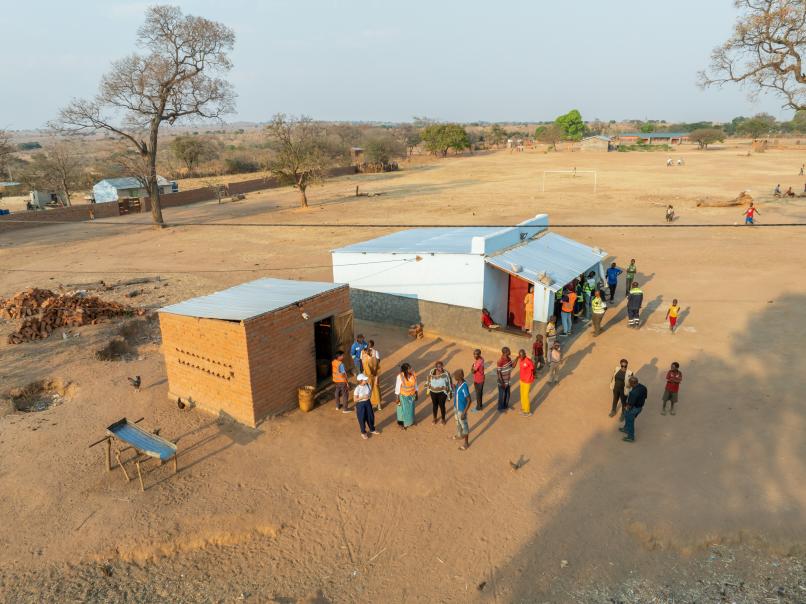
The idea behind ZEDSI is that incentivizing private off-grid developers to boost energy use, especially through productive uses of energy (PUEs), increases consumption and makes existing mini-grids more financially viable. The ultimate result is an increase in future investments in off-grid energy – reducing energy poverty. ZEDSI has made considerable progress. It has onboarded three private off-grid developers to install solar mini-grids across 43 rural communities and has been actively encouraging people to adopt PUE equipment and use electricity productively. Across seven active sites, farmers are using milling and grinding machines to process their harvests, small businesses are running cold storage units and households are charging phones and appliances.
Early results show that customers supported under ZEDSI are using nearly eight times more electricity than those who are not. These mini-grid projects are also earning almost seven times more on average, thus increasing economic viability for the developers. With these numbers expected to increase over time as more people are onboarded, ZEDSI is set for significant growth.
One of the significant conversations was on the proposed Universal Access Cluster (UAC) model. is an integrated framework for rural electrification that considers the least cost combination of all electrification modes, including grid extension, mini grids, mesh grids, and SHS. This framework provides a natural shift away from partial capex subsidization and cost reflective tariffs toward a cross-subsidization mechanism, offering a more sustainable, long term, pathway to universal electrification within a country. REA is now preparing to pilot the first set of clusters in collaboration with the Global Energy Alliance and SEforALL. The pilot will focus on creating an investment case that will attract more investors to the mini-grid market.
In addition, the initiative has established a geospatial working group that brings together key government agencies to plan electrification together. The initiative is also building the foundations for sustainable rural electrification through supporting the strengthening of REA’s national electrification master plan with better data and mapping tools.
With support from The Rockefeller Foundation, Global Energy Alliance, and Sustainable Energy for All, rural businesses powered by mini-grids are growing across Zambia. This work helps stimulate demand, strengthen local enterprises and fuel lasting social and economic progress.
Image credits: The Rockefeller Foundation.
Related content


