
How Mentorship Powers Women in Clean Cooking
Every year, nearly three million people die prematurely every year from illnesses associated with exposure to smoke from polluting open fires or inefficient stoves, with women the most affected. Women suffer from health issues caused by smoke inhaled when cooking on a traditional, fire-driven stove. Moving from traditional cooking fuels to cooking driven by electricity - also known as clean cooking - is therefore a key solution to achieving gender equality, addressing climate change and improving the health and safety of communities.
Consequently, women play a critical role in increasing awareness and generating demand for clean cooking solutions, and the clean cooking value chain offers powerful pathways for women’s economic empowerment.
Yet, women continue to face financial, social and structural barriers to their access to clean cooking technologies and employment in the clean cooking sector. Recognizing this SEforALL, the Clean Cooking Alliance (CCA), and the Global Women’s Network for the Energy Transition (GWNET) launched the Women in Clean Cooking (WiCC) Mentorship Programme, an initiative empowering women professionals to drive change through mentorship, knowledge exchange and leadership development. To date, 262 women have received mentorship through the WiCC programme, advancing their careers in the clean cooking sector.
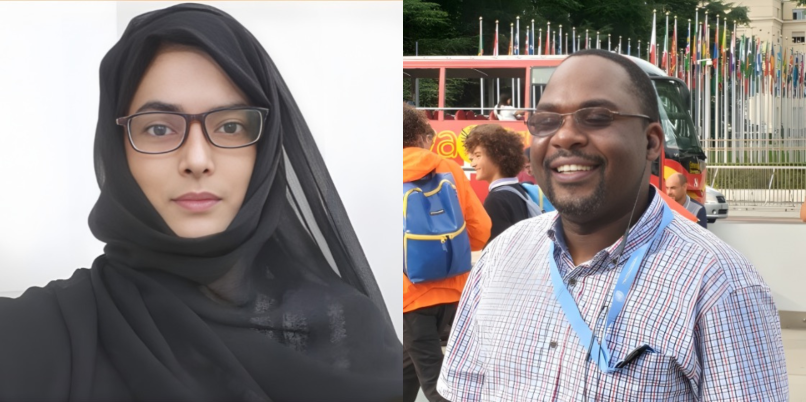
This Women’s History Month, in recognition of the International Women’s Day 2026 theme of Rights. Justice. Action. For ALL Women and Girls, SEforALL highlights the inspiring journey of Aqeela Mughal, a Project Coordinator at Revive Environment Pvt. Ltd., and her mentor Joseph Hwani, an Energy and Environment Expert. This story demonstrates how mentorship can ignite sustainable impact to #EmPowerHer.
Building confidence and community
Aqueela started working with clean cooking in 2021. She has sought to improve the cooking conditions of women and children exposed to traditional fire-driven stove cooking given the benefits of the Improved Cookstove (IC) on health, environmental conservation and energy access. This led her to working with carbon removal projects, clean cooking programme implementation and researching environmental and sustainability subjects.
“I recognized the need for strategic guidance to scale and impact more effectively. I sought mentorship to bridge the gap between implementation and long-term sustainability, particularly in areas like market development, user behavior change, policy alignment and carbon financing,” Aqeela shares.
Enter her mentor, Joseph, whose academic and professional career in renewable energy research and development led to his contributions to sustainable development across Africa, Europe and Australia.
For Joseph, being a mentor is a source of inspiration. “Thanks to the WiCC Mentorship Programme, I have had the opportunity to live this passion, sharing knowledge and experiences while supporting my mentee in achieving her aspirations,” he shares.
Through their mentorship, Aqeela and Joseph explored technical and strategic themes, from proposal writing to carbon financing and user-focused clean cooking design. Aqeela reflects that the most powerful piece of advice she received was Joseph’s reminder that “technical efficiency alone doesn’t lead to impact; it must be paired with cultural, behavioral and economic fit.”
For Joseph, the mentorship has been equally rewarding: “These exchanges not only strengthened Aqeela’s capacity but also enhanced my own collaborative approach, reinforcing the power of listening with the intent to understand."
Clean cooking as empowerment
With her mentor’s support, Aqeela now views clean cooking not as a purely technical intervention, but as a catalyst for education, livelihoods and resilience in underserved communities. Aqeela’s reflections underline the importance of her mentorship experience in pairing technical knowledge with advocacy and social innovation, reflecting that the experience has given her the confidence to pursue roles that create both social and environmental impact. Her work in the sector now focuses on “the people whose lives it will change,” she tells us.
Joseph adds that watching Aqeela “secure funding and achieve certification of her stoves has been deeply rewarding. Her success is a testament to her determination and a reminder of how impactful mentorship can be in shaping careers and advancing sustainable solutions.”
Celebrating women powering the energy transition
Aqeela and Joseph’s story illustrates how mentorship can shape careers and communities at once. It is a testament to the power of investing in women, and how shared expertise accelerates progress towards sustainable development goals.
As SEforALL celebrates Women’s History Month, we reinforce our commitment to supporting the women transforming energy systems and leading their communities towards a more sustainable future.
Learn more about Joseph and Aqeela’s mentorship journey through the WiCC Programme.
Related content


