
Ibrahim’s Kitchen: How Clean Cooking Is Changing Work, Health and Dignity in a Tanzanian School
By Rose Rwegasir with support from Hadija Udodo - both are SEforALL STEM Trainees working on the Clean Cooking in Schools project in Tanzania
For school cooks, clean cooking is not just about technology — it is about health, time and dignity. At Kibasila Primary School in Temeke District, Tanzania, the introduction of electric pressure cookers has transformed daily work in the school kitchen.
As part of Sustainable Energy for All (SEforALL) and World Food Programme’s (WFP) joint initiative, Accelerating Clean Cooking Transition in Schools in Tanzania, implemented in partnership with the Government of Tanzania, with support from UKAid - Modern Energy Cooking Services (MECS) programme, Kibasila Primary School is demonstrating how modern cooking solutions in public institutions can improve working conditions while supporting education outcomes.
We spoke with Ibrahim Mohamed, a cook at Kibasila Primary School, about how clean cooking has changed his daily life.
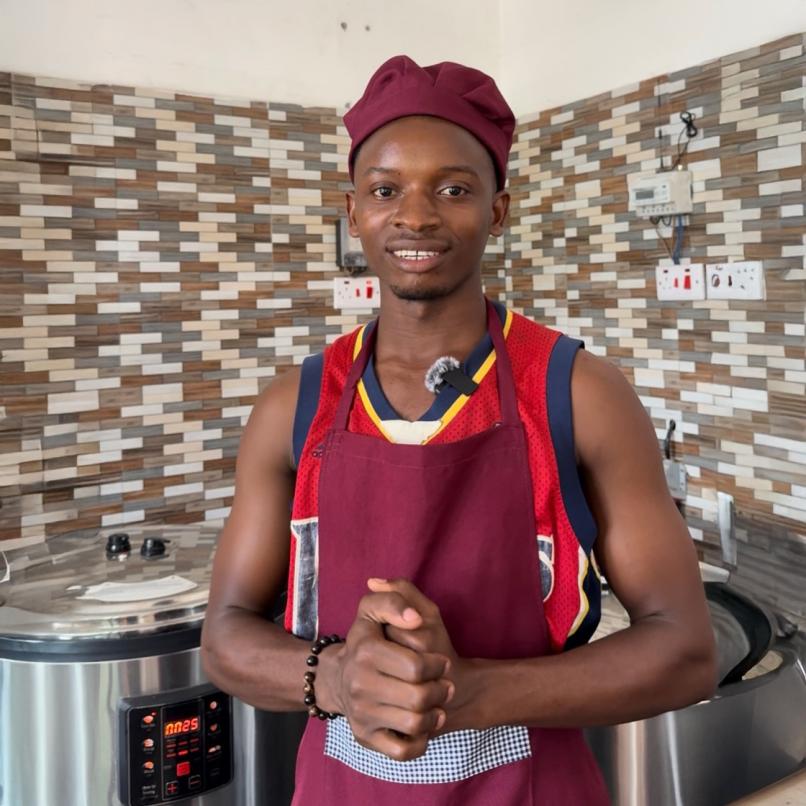
Who is Ibrahim Mohamed?
My name is Ibrahim Mohamed. I work as a cook at Kibasila Primary School. Every day, my responsibility is to prepare meals for students so that they can eat on time and return to class ready to learn.
What was cooking like before the refurbished kitchen?
Before, we cooked using firewood. The work was very tiring. We cooked outside, and we were exposed to smoke, heat and rain. Cooking took a long time, and sometimes food was served very late in the day.
The smoke affected our chests, and we often finished work very late, sometimes at 4:00pm, 5:00 or even 6:00pm in the evening.
How did these conditions affect your health and daily work?
Cooking with firewood caused many health challenges. Smoke affected our breathing, and working outside in bad weather made the work even harder. On some days, we were extremely exhausted.
Even when it rained, we still had to cook until the food was ready. There was no option to stop.
What changed after electric pressure cookers were introduced?
The change has been very big. Now we cook using electric pressure cookers, which are modern and efficient. Meals are prepared much faster, and students eat on time.
From around midday, food is already cooked, students have eaten and they return to class as scheduled. We now work indoors in a comfortable environment, regardless of the weather.
How has this affected your health and quality of life?
My health has improved significantly. Since we started using electric cooking, I have not experienced chest problems or frequent illness. We also finish work on time and have time to rest and return home earlier.
Why do you think clean cooking matters beyond your school?
Clean cooking helps not only schools, but also households. These technologies reduce health risks, save time and make cooking less burdensome.
I hope this initiative continues and expands, so that more schools and families can benefit from safer and more efficient cooking.
From daily work to system change
Ibrahim’s experience highlights how clean cooking solutions can improve occupational health, free up valuable time and restore dignity to essential work — outcomes that are central to inclusive energy transitions.
Related content


