
Towards a renewed commitment to energy for healthcare
By Luc Severi, Head of Energy Access at SEforALL.
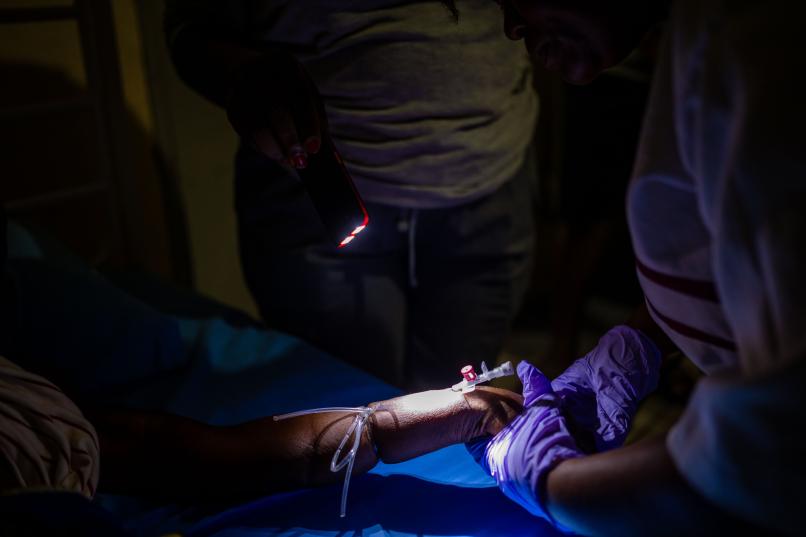
As we observe World Health Day 2026, it is good to be reminded of a few key numbers that have guided my work over the last decade. Nearly a billion people rely on health facilities where electricity is either unavailable or unreliable, significantly impacting their ability to deliver quality health services. The global pandemic injected much-needed momentum to the sector, but we are now firmly in a post-pandemic world, where the funding landscape for international development is changing rapidly. We cannot lose sight of the critical importance of reliable energy to achieve universal health coverage, especially as long as mothers still give birth in the dark and vaccines go to waste due to interrupted cold chains.
At Sustainable Energy for All (SEforALL), health facility electrification remains a core priority, particularly through our Powering Healthcare programme. Over the years, we have worked closely with partners across the health and energy sectors, consistently making the case that bridging the energy gap in healthcare requires stronger collaboration, sustained investment, and greater urgency.
Our commitment extends beyond advocacy into direct action.Since 2020, SEforALL has deployed power solutions in 61 facilities across four countries. In Sierra Leone, for example, a long-standing partnership with FCDO and the Ministry of Health has equipped 17 hospitals and 25 clinics with solar PV and storage solutions. . By the time you read this, an 18th hospital will likely have been connected as well. The impact has been both immediate and measurable. Across the first six hospitals, we observed a 158% increase in energy consumption within a single year. Despite this significant increase in energy consumption, diesel generator reliance dropped by 38%. These figures translate into clear outcomes for the sector: lower electricity costs, enhanced reliability, reduced emissions and improved health services.
With the support of Transforming Energy Access, we have also piloted innovations in seven countries through the Powering Healthcare Innovation Fund. These innovations all have the potential to significantly change how energy is delivered to health facilities, manage long-term operations and maintenance and manage health data across the health sector.
Finally, with partners including UNICEF, GEAPP, and FCDO, we have led the charge in ensuring that market intelligence is transparent and reliable, by developing country-level market assessments and roadmaps. These assessments allow governments and development partners to implement projects with better data by avoiding duplication of efforts and improving intersectoral coordination.
Across the sector, many other organizations have been working to power up clinics, deploy energy-efficient medical appliances, and phase out reliance on diesel generators. While emerging financing models such as energy-as-a-service, income-generating activities and distributed renewable energy certificates (D-RECs) hold promise they have not yet reached scale.
The energy access gap in the health sector remains substantial, leaving an estimated 100,000 health facilities in Sub-Saharan Africa alone without adequate power. Alongside the WHO, the World Bank and IRENA, we estimated the investment required to deliver reliable power to every health facility. The answer: $4.9 billion, which equates to roughly $5 for every person impacted.
Closing this gap will require continued innovation and smart partnerships across the energy, health, and climate sectors. It also requires strong collaboration between public and private entities. Above all, we need a firm commitment to recognize and finance energy as a foundational component of resilient health systems. Because it will cost us much more than $5 per person if clinics remain in the dark.
Related content


