SEforALL extends Sierra Leone Healthcare Electrification Project to Kailahun Hospital and 25 Community Health Centres

Press release

Successful electrification of six leading hospitals in Sierra Leone inspired the extension 

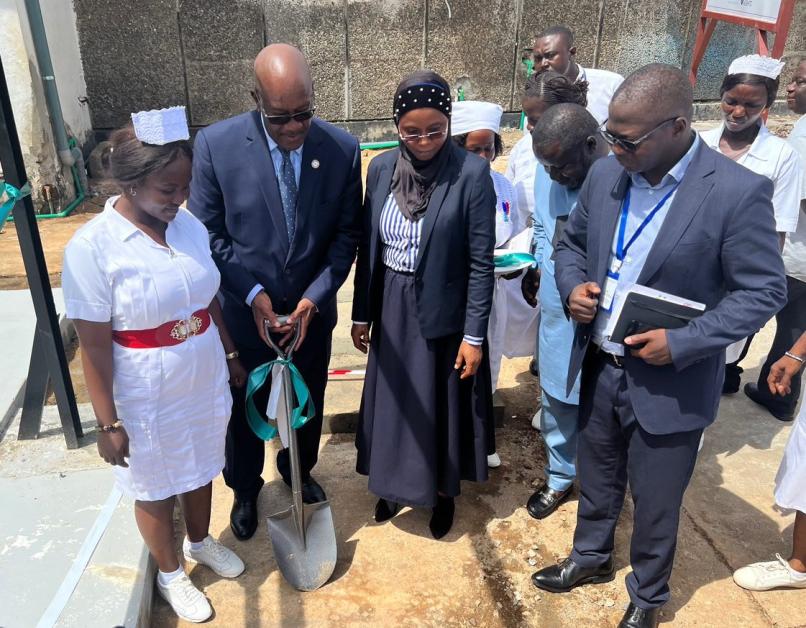
FREETOWN, Sierra Leone, 20 September - Sustainable Energy for All (SEforALL) has now extended the Sierra Leone Healthcare Electrification Project to provide solar power electrification of 0.308 Megawatt peak (MWp) to an additional government hospital in Kailahun and 25 Community Health Centres (CHCs) across the country. 


Currently, 18 of these CHCs have no existing power source and the remaining have unreliable access to the grid or are self-generating using diesel. But that will change when the solar PV and battery systems are installed, giving doctors and nurses a reliable power source for treating patients. The new systems will significantly lower reliance on diesel generators, which will reduce the government’s healthcare expenditure on generator fuel and prevent greenhouse gas emissions. 
 

This groundbreaking project is in collaboration with the Ministry of Health in Sierra Leone alongside support from the UK Government and the Global Energy Alliance for People and Planet (GEAPP) until its completion date of October 2024. 


Collaborative efforts are vital, the Minister of Health, Dr. Austin Demby emphasized this: “The link between energy and health sectors is instrumental in improving service delivery and health outcomes. We made a commitment at COP28 that we will go green for health and this means that as we increase the number of health facilities and improve on existing ones, we will be conscious about the climate by ensuring that we prioritize renewable energy sources. This is why we are very pleased with the partnership we have with SEforALL and the UK Government as they help electrify our health facilities.”  
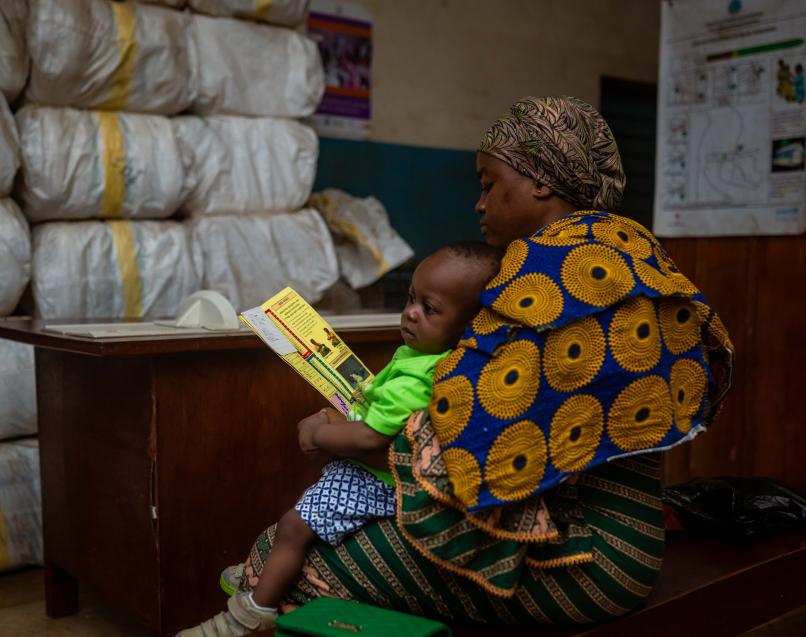
 

Sierra Leone Powering Healthcare


The Sierra Leone Healthcare Electrification Project was launched after needs assessments were carried out in October 2022. Solar panels with battery systems were commissioned at six prominent medical facilities including the Ola During Children’s Hospital and the Princess Christian Maternity Hospital both in Freetown, then Masanga Hospital in Tonkolili, and three more government hospitals in Kambia, Kabala and Bonthe by late December 2023.  


Solar power is life-changing, a Maternity Nurse at Kambia Government Hospital, Mariatu Kamara reflected: “Can you believe we used phone lights to perform deliveries in the maternity ward? Solar has made my work easier. I'm now free from the ordeal of holding a phone in my mouth while I do the delivery. The patients are also happy.” 


The initial six hospitals received a combined total of more than 0.6MWp of installed solar PV capacity with battery storage, and are now fully equipped to provide critical medical care at all hours of the day and night. 
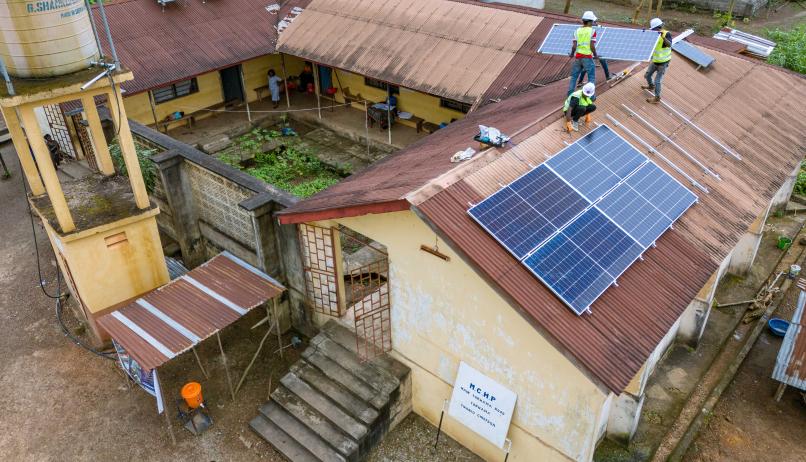
 

Torwama CHC Installation.jpg
Image: Torwama MCHP 6.6 kWp Installation


This phase of the project will power facilities in several districts, including Bo, Bonthe, Kailahun, Kono, Tonkolili, and the Western Area, benefiting key centers such as Bo School Clinic, Gerihun CHC, Moriba Town CHC, Taiama Trauma Centre, and Jenner Wright in Freetown, alongside 20 other facilities.


The transition has been transformative for Sierra Leone and it’s only the beginning. SEforALL’s Sierra Leone Country Manager, Ngozi Beckley-Lines expressed pride in the project’s impact: “Rural and underserved communities can now rely on clean and renewable solar power, ensuring improved around-the-clock medical care. The energy transition work continues, and we will leave no one behind.”


SEforALL plans to install a total of 4.3MWp of solar power across Sierra Leone. The third and final phase of the Sierra Leone Healthcare Electrification Project will supply another 11 hospitals including Lakka, Port Loko, Makeni and Kenema Government Hospitals with solar PV and battery systems.

Energizing Rwanda's Development

Research
Rwanda-solar-water-pump

Opportunities and Strategies for Catalyzing Productive Use of Energy

Rwanda is among the fastest growing economies in Africa. Over the past two years, annual growth in its gross domestic product (GDP) exceeded 8 percent, nearly twice the average for Sub-Saharan Africa. This growth aligns with the Rwandan government’s goal of transitioning the country from an agricultural-based economy to one driven more by industry and services. Over the past eight years, Rwanda, along with six other countries in the region, achieved or surpassed required progress levels on electricity access. By 2022, the country’s electrification rate stood at approximately 61 percent through grid-based (47 percent) and off-grid (14 percent) connections. In its progress toward achieving universal access, the government regularly reviews electrification targets and activities.

With the support of development partners, the government is increasingly shifting its focus toward leveraging electricity services to spur economic development and job creation. The World Bank, in collaboration with SEforALL, conducted this study to assess Rwanda’s potential in the productive use of energy (PUE). The aim was to bridge knowledge gaps on market actors, products, and the market environment and provide recommendations for scaling up PUE technologies. 

Key objectives were to assess the potential electricity demand of Rwanda’s productive energy users (grid-based, off-grid, and non-electrified), examine barriers that hinder their uptake of high-potential PUE technologies, and propose financial and technical interventions to overcome them.

Webinar: How trade policies can shape regional renewable energy supply chains and catalyze domestic manufacturing in Africa

Webinar
Date
13:30 CET
25 Jun 2024
End
14:45 CET
25 Jun 2024


Developing domestic renewable energy manufacturing is emerging as a key policy priority in Africa. Alongside energy transition and green growth strategies, it is seen as an opportunity to reduce import dependency, build local industries leveraging existing capacities and resources, as well as maximize job creation along the value chain. To achieve this, a basket of policies is usually necessary, as part of a holistic industrial policy framework, that hinges a long-term strategic vision and addresses both supply- and demand-side incentives, alongside interventions focused on education and training, trade, technology transfer, logistics and complementary infrastructure roll-out. Trade policies are increasingly coming to the fore as one of the fundamental levers for attracting investments in local manufacturing of energy transition solutions, including solar PV, batteries and electric vehicles. African countries also continue to trade with the rest of the world more than among themselves.

This second webinar in the Africa Renewable Energy Manufacturing Initiative (REMI) South-South Virtual Policy Dialogue Series will deep-dive into how trade policies need to be shaped to support the development of the renewable energy manufacturing sector in Africa with a focus on solar PV, battery and electric vehicles. It will convene representatives from government, trade facilitation agencies, thinks tanks and the private sector to discuss actions needed to strengthen the trade policy framework to facilitate the development of renewable energy supply chains in Africa.

Agenda

TimeItem
12.30 – 12.35Opening remarks
12.35 – 12.45                

Scene-setting remarks

Clovis Freire, Chief, Commodity Research and Analysis Section, Commodities Branch, Division on International Trade and Commodities, UN Trade and Development

12.45 – 13.45 

Moderated panel discussion

  • Fenwicks Musonye, Deputy Director – Energy Efficiency, Energy and Petroleum Regulatory Authority, Kenya
  • Loving Asibey Koranteng, Chief Investment Officer, SolarTaxi, Ghana
  • Matthew Cullinan, CEO, Atlantis Greentech Special Economic Zone, South Africa
  • Souleymane Abdallah, Regional Integration and Trade Department, UNECA
  • Sylviah Mwaura, Senior Associate, GreenMax Capital Advisors
  • Teniola T Tayo, Trade Policy Fellow, Africa Policy Research Institute

Audience Q&A


Solar energy projects supported by Universal Energy Facility power businesses at Iponri Market in Nigeria

News

On 11 November, the Chief of Staff to the President, Federal Republic of Nigeria, Femi Gbajabiamila alongside Special Representative of the UN Secretary-General for Sustainable Energy for All, Damilola Ogunbiyi, visited Iponri Market in Surulere, Lagos State and inspected the first phase of solar installations deployed within the popular market. They were accompanied by Sterling Bank’s Chief Executive Officer, Abubakar Suleiman and All On’s Chief Executive Officer, Caroline Eboumbou.

This visit to Iponri Market afforded the dignitaries the opportunity to interact with the end-users and provided valuable insights into the impact of clean and reliable energy on their respective business operations.   

The solar projects, funded by Universal Energy Facility (UEF) a results-based finance facility administered by Sustainable Energy for All (SEforALL) and executed by SOLAD Integrated Power, a clean energy and technology company, is an exciting development that underscores the commitment of both the Nigerian government and the Universal Energy Facility (UEF) to promoting sustainable energy solutions in the country.  

Speaking during their visit to the market, Gbajabiamila and Ogunbiyi lauded the initiative at making clean and sustainable energy accessible for all. 

"The electrification of the Iponri Market with sustainable energy solutions exemplifies Nigeria's unwavering commitment to enhancing energy access, driving economic growth, and embracing the transformative potential of solar energy. This visit to witness the impact of clean, affordable energy reaffirms our dedication to businesses, emission reduction, and advancing our nation toward a more sustainable and prosperous future," Gbajabiamila said.

"Sustainable energy access is the cornerstone of a brighter and more equitable future for all. Our visit to the Iponri Market today underscores our commitment to empowering communities with clean, affordable, and sustainable energy solutions, setting the stage for Nigeria's energy transition to a greener future," UN SRSG Ogunbiyi said.  

In August 2023, SOLAD Integrated Power began the provision of clean, sustainable and renewable energy solutions to empower business owners within Iponri market. Through the utilization of solar power, the market's micro, small, and medium-scale enterprise (MSME) owners are gaining access to stable, affordable, and clean energy, which is set to revolutionize the way they operate.  

As of November 2023, SOLAD Integrated Power has successfully connected in the first phase, 200 commercial customers in the Iponri Market to high-capacity stand-alone solar power and battery storage systems for productive use. 

SOLAD Integrated Power with support from the UEF has also undertaken a similar project at Ayangburen Market, Ikorodu where small businesses are already enjoying clean electricity supply. 

The Universal Energy Facility (UEF) is a multi-donor results-based finance facility established to significantly speed up and scale up energy access across Sub-Saharan Africa, in line with SDG7 and the Paris Agreement.  It provides catalytic, results-based grant payments to qualified renewable energy companies that provide verified end-user electricity connections. The facility supports sustainable business models such as the energy-as-a-service and lease-to-own models – that alleviate the upfront cost barrier to adopting clean energy, enable the displacement of fuel generators and help developers to catalyze private commercial capital to scale their business operations. 

UEF is managed by Sustainable Energy for All (SEforALL) and supported by the Global Energy Alliance for People and Planet, Shell Foundation, The Rockefeller Foundation, Africa Minigrid Developers Association, Power Africa, Good Energies, UKaid, Carbon Trust, IKEA Foundation, Federal Ministry for Economic Cooperation and Development, Germany (BMZ) and Deutsche Gesellschaft für Internationale Zusammenarbeit (GIZ).  

Examining the potential for electric cooking in Rwanda

News

Cooking with firewood is harmful to peoples’ health and the environment, which is why the global push for clean cooking seeks to help people transition to less polluting cooking solutions.

According to the IEA, Rwanda ranks among the top 20 countries worldwide with the lowest percentage of the population with access to clean fuels and technologies. Approximately 93 percent of Rwandan households use biomass for cooking in the form of firewood (76 percent) and charcoal (17 percent), according to the 2022 Population and Housing Census of Rwanda.

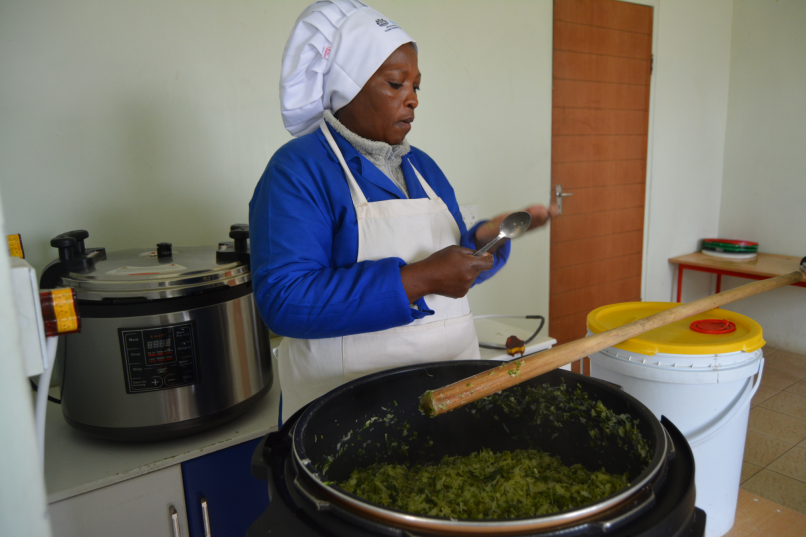
A study developed by Sustainable Energy for All and its partners examined the potential for electric pressure cookers (EPCs) to replace these traditional, polluting cooking methods in Rwanda and inform government and industry efforts to promote the technology’s adoption.

The electric cooking (eCooking) study was a joint initiative between Nexleaf Analytics, Modern Energy Cooking Services, Electrocook, A2EI and Climate Solutions Consulting, with support from Swedish Postcode Foundation. It involved Electrocook providing 100 participants with EPCs  as a replacement for the charcoal and/or LPG stoves they were previously using. Their experiences with the EPCs were tracked to assess several factors, including overall usage, cooking costs, time savings, changes to cooking habits, and more.

Key findings of the study are summarized in a report titled Examining the Experience of Using Electric Pressure Cookers in Urban Households in Kigali, Rwanda and show that the overall experience of cooking with an EPC, which was a new cooking appliance to nearly all participating households, was positive.

The study shows that transitioning to eCooking offers numerous advantages both within households and on a wider scale. Study participants appreciated the cleaner and more convenient cooking experience offered by the EPC, both in terms of the fuel preparation and the cooking process itself. For example, the median time taken to prepare a meal decreased from one hour 44 minutes in the baseline phase to one hour 30 minutes in the pilot phase, resulting in a time saving of nearly 15 minutes.For some food like vegetables, about 30 minutes can be saved and savings for cooking beans are even greater.

clean-cooking-Rwanda

However, the study also revealed several key barriers to consumer uptake of EPCs. For example, participants commonly resorted to fuel stacking (using an additional cooking method), indicating the challenge of cooking multiple dishes in an EPC, especially given that only one pot was provided with the appliance. This finding emphasizes the need for a cooking appliance that can accommodate multiple dishes simultaneously and include multiple pots (whether as an extra item paid for upfront or in instalments, or as part of a set).

These types of insights are meant to guide the efforts of industry and government to support a transition to clean cooking. Additionally, the report highlights that it is crucial to overcome potential barriers to people buying and using appliances. These include the cost, the current lack of training and familiarity with how to use eCooking appliances, user-centric design considerations, shared household electricity meters, and lack of awareness on cost competitiveness of cooking with electricity as part of a cooking mix. By addressing these factors, households can be encouraged to move away from biomass and transition towards cleaner and more sustainable fuel alternatives.

Up until recently, cooking with electricity was not viewed as a viable clean cooking alternative in Rwanda and other low-middle income countries due to the relatively high cost and inefficiency of electric cooking appliances, low levels of electricity access, and high cost of electricity where connections are available. However, with the emergence of energy-efficient appliances such as EPCs and the increasing availability and improved reliability of electricity, particularly in urban centres, electric cooking has become an option for greater numbers of people.

Study findings were presented during a workshop in Kigali on 8 November involving representatives from the Rwandan government, development partners, researchers and local clean cooking companies. The EPC pilot dataset is integral to the electric cooking model in the Integrated Clean Cooking Planning Tool that is being used to develop the Rwanda National Integrated Clean Cooking Plan, which will be publicly accessible by all stakeholders within the clean cooking sector. This strategic initiative will, in turn, facilitate informed decision-making for both government agencies and private sector actors.

Country

Rwanda

Programme

Clean Cooking

Chilling Prospects: Sustainable cooling in buildings and cities – Nigeria case study

Data analysis

Nigeria is one of the Critical 9 [1] countries facing a significant cooling access gap, with 114.9 million people (53 percent of the total population) at high risk due to high temperatures. This represents a significant share of the population living in poverty and lacking access to sufficient and reliable electricity. 

Policy, practical and research initiatives are underway to adapt and establish sustainable cooling in Nigeria’s buildings and cities. These efforts aim to enhance human comfort and safety while simultaneously curbing the country's excessive energy consumption and greenhouse gas (GHG) emissions.

In 2017, the first Nigeria Building Energy Efficiency Code was launched following a process of existing building code analysis, stakeholder consultation, industry training and a demonstration project that ensured it was tailored to the local context. [2] The code follows a methodology that prioritizes passive design to reduce energy demand and encourages efficient building systems to reduce energy consumption.

Passive design considers local climate conditions, building orientation, form, massing, and materials to minimize the need for mechanical and electrical systems. In hot climates, this involves providing solar shading, natural ventilation opportunities and passive cooling through thermal mass and evaporative cooling, where appropriate. Passive design, including nature-based solutions, plays a crucial role in sustainable cooling for cities and buildings, regardless of whether air-conditioning is utilized.

A simulated demonstration project highlighted how cost-effective measures such as window film and shading can reduce cooling energy demand by 20 percent compared to typical design and construction methods. With the addition of an insulated building shell, the cooling demand reduction reaches 44 percent.

The new building code mandates passive design requirements for residential and office buildings, including a maximum window-to-wall ratio of 20 percent or adequate solar shading and roof insulation with a thermal resistance of at least 1.25 m2K/W (this measures the resistence to heat flow known as the R-value). 

In terms of efficiency, the code stipulates that all air-conditioning units must have a minimum Energy Efficiency Ratio (EER) of 2.8 (this is the ratio of output cooling energy to input electrical energy, i.e. a EER of 2.8 means 1kWh of electricity will provide 2.8kWh of cooling energy). This requirement is further supported by the government and the UNEP project "Scaling Up Energy-Efficient and Climate-Friendly Cooling in Nigeria’s Nationally Determined Contributions Revision", which established a National Technical Committee in March 2023. [3]

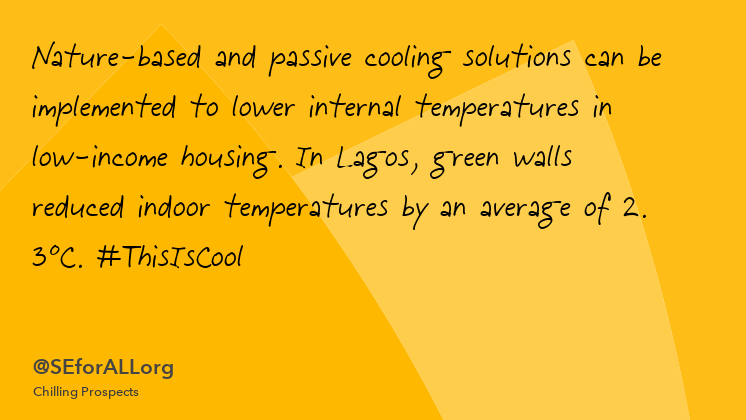
In addition to formal building sectors, paying special attention to informal settlements and socially vulnerable communities is crucial, which often experience higher heat exposure due to dense housing, heat-trapping construction materials, and limited vegetation. One study showed that 70 percent of occupants in low-income housing in Abuja experience thermal discomfort. [4] Nature-based and passive design solutions can be implemented to lower internal temperatures in low-income housing, mitigating thermal discomfort and preventing the negative health effects of heat stress. For instance: 

  • In Lagos, vegetation on external walls (green walls) reduced indoor temperatures by an average of 2.3°C, achieving 90-100 percent internal comfort conditions. [5] 
  • Shading devices, like verandas, can reduce the frequency of indoor thermal discomfort by 8.5-19.5 percent according to validated simulations. [6]

Effective implementation is crucial for the success of any energy-efficiency building code or sustainable cooling solution. In Nigeria, raising awareness and fostering collaboration among all stakeholders in the building industry is essential for implementing its Building Energy Efficiency Code [7]. Moreover, implementing passive design measures in low-income urban environments requires a comprehensive approach, including community participation, capacity building and ongoing monitoring and evaluation. 

Notes and references

[1] The Critical 9 countries are: Bangladesh, Brazil, China, India, Indonesia, Mozambique, Nigeria, Pakistan and Sudan.
[2] Geissler, Susanne & Österreicher, Doris & Macharm, Ene. (2018). Transition towards Energy Efficiency: Developing the Nigerian Building Energy Efficiency Code. Sustainability. 10. 2620. 10.3390/su10082620.
[3] https://united4efficiency.org/inauguration-of-national-technical-committee-drives-progress-towards-energy-efficient-and-climate-friendly-cooling-in-nigeria/
[4] Michael U. Adaji, Timothy O. Adekunle, Richard Watkins, Gerald Adler, Indoor comfort and adaptation in low-income and middle-income residential buildings in a Nigerian city during a dry season, Building and Environment, Volume 162,2019,106276,ISSN 0360-1323, https://doi.org/10.1016/j.buildenv.2019.106276.
[5] Akinwolemiwa, O.H.; de Souza, C.B.; De Luca, L.M.; Gwilliam, J. Building community-driven vertical greening systems for people living on less than £ 1 a day: A case study in Nigeria. Build. Environ. 2018, 131, 277–287
[6] Abdulkareem, M.; Al-Maiyah, S.A.M. Environmental Performance of Abuja’s Low-Income Housing: Understanding the Current State to Inform Future Refinement. In Proceedings of the PLEA (Passive Low Energy Architecture) Conference, Hong Kong, 10–12 December 2018.
[7] Ochedi, Ekele & Taki, Professor. (2019). Towards Energy Efficient Buildings in Nigeria: Challenges and Opportunities. JOURNAL OF ENGINEERING AND ARCHITECTURE. 7. 10.15640/jea.v7n2a14.
 

Country

Nigeria

Programme

Cooling for All

Chilling Prospects: Innovative financing at CLASP

Results-based financing for sustainable cooling solutions
Data analysis

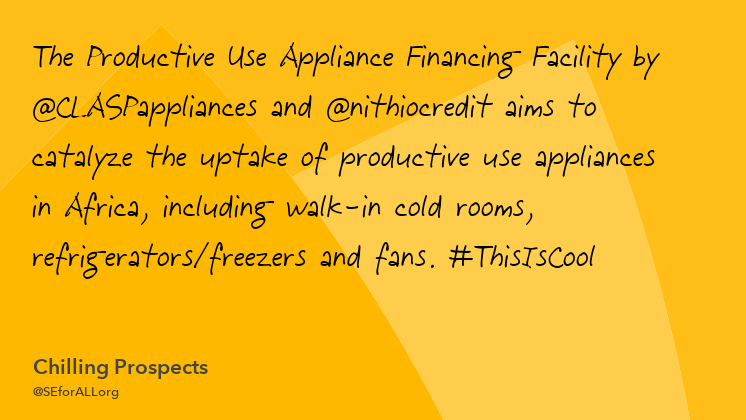
Financing mechanisms for cooling in under-electrified settings hold significant potential to improve quality of life and economic productivity but have not yet been widely tested at scale. Announced in October 2022, the Productive Use Appliance Financing Facility delivered by CLASP and Nithio aims to catalyze the uptake of productive use appliances in Africa across six appliance types with the potential to drive development impact, including three that support cooling: walk-in cold rooms, refrigerators/freezers and fans.  

The facility supports companies that operate in the Democratic Republic of the Congo (DRC), Ethiopia, Kenya, Nigeria, Sierra Leone and Uganda and will offer a range of support, including capacity-building grants, product testing and benchmarking, procurement subsidies, matchmaking and concessional debt. Chilling Prospects analysis indicates that almost 130 million people are at high risk due to lack of access to cooling in these countries, including almost 49 million rural poor people who lack access to electricity.  

The facility's goal is to address one of the most challenging aspects of deploying highly efficient, sustainable cooling technologies: affordability and high first cost. For example, the cost of a quality-assured off-grid refrigerator is approximately 85 percent of the average Kenyan’s household income – making it prohibitively expensive despite the clear benefits of access. In a survey of 1,502 off-grid refrigeration customers conducted in Kenya, Tanzania and Uganda, 37 percent of respondents reported a ‘very much improved’ quality of life and 79 percent reported using their off-grid refrigerator for income-generating activity.  

Innovative financing tools to support the uptake of cooling appliances, particularly in rural areas with a lower ability to pay for energy services, are particularly important to improve affordability. The Productive Use Appliance Financing Facility aims to improve affordability through direct unit cost reductions. It drives initial economies of scale on the supply side and makes it easier for appliance distributors to offer consumer financing. 

In many cases, technological innovation in cooling is more immediately accessible for grid-connected and higher-income consumers. There is a pressing need to broaden the range of affordable solutions to rural and low-income consumers. In supporting the uptake of cooling appliances, the Productive Use Appliance Financing Facility is demonstrating progress, but more pro-rural innovation and finance are needed to deploy renewable energy-based cooling technologies and applications along food, health and building value chains in rural, remote and off-grid locations.  

Photo credit: CLASP