Clean Energy and Oxygen Innovation Powers Hospitals in Nigeria

News

Newdigit’s Just Add Water is a modular Regenerative PEM fuel cell solution that uses grey water and the power of the sun to produce oxygen and electricity.

Lagos, Nigeria.  September 11, 2025

Newdigit, a Lagos-based clean energy company, is improving healthcare in Nigeria by providing hospitals with reliable electricity and medical-grade oxygen through a modular system. Supported by the Powering Healthcare Innovation Fund, its Just Add Water technology combines solar power and Proton Exchange Membrane (PEM) fuel cell technology to generate electricity, oxygen, and clean water for health facilities. Beyond healthcare, Newdigit’s innovation also supports agriculture and other small- to industrial-scale uses. 

“Many hospitals in Nigeria rely on unstable electricity from the grid, with 8-10 hours of power cuts every day, so they use polluting diesel generators for backup”, says Derick Nwasor, co-founder and CEO of Newdigit. “With Just Add Water, hospitals can power essential equipment, produce life-saving oxygen onsite and even recover clean water, leading to improved healthcare services.”

Turning sunlight and water into reliable energy for hospitals

The system combines a PEM electrolyzer that splits water to produce hydrogen and oxygen, a PEM fuel cell that converts hydrogen into reliable electricity, and a solar-powered array that runs the entire process using renewable energy. Together, these components provide hospitals with 12–15 kW of continuous clean power, 10–40 litres per day of medical-grade oxygen, and clean water as a by-product. Its plug-and-play design allows for fast installation and easy scaling.
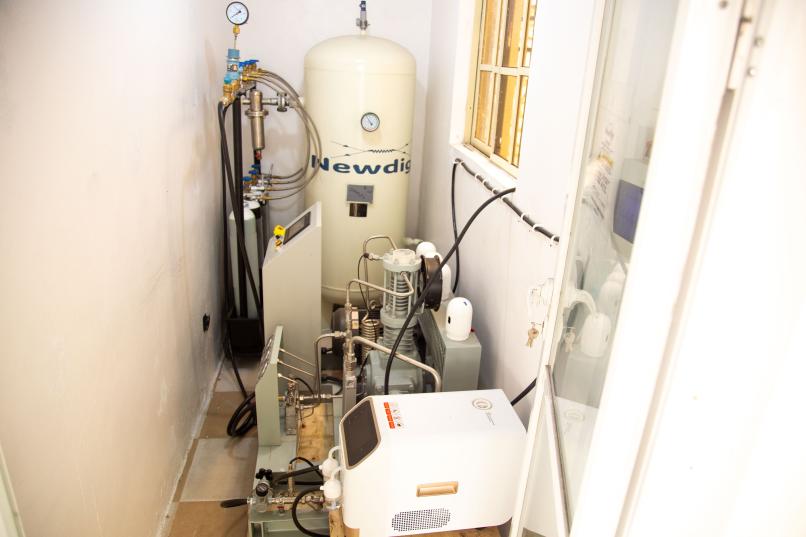
The plug-and-play installation allows fast deployment and scaling

Newdigit’s Just Add Water systems are being installed in three hospitals across Lagos, Nigeria, serving more than 24,000 patients each year. By reducing dependence on unreliable grids and costly diesel generators, the systems will generate around 274 MWh of clean electricity in their first year and avoid over 150 tonnes of CO₂ emissions annually. To ensure sustainability and local ownership, Newdigit is training hospital staff and local technicians to operate and maintain the systems—building capacity to keep facilities powered and self-reliant.
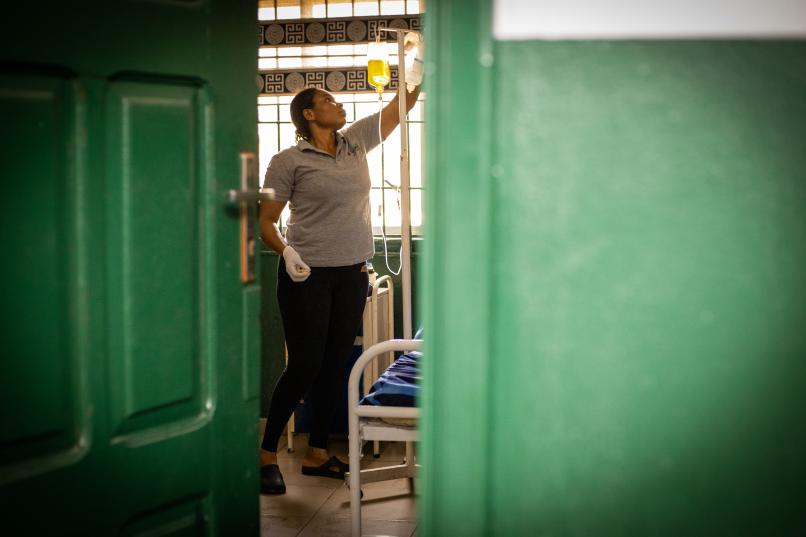
Healthcare workers are being trained to operate and maintain the new systems to ensure sustainability and local ownership

“We have started now in Lagos, but our goal by 2030 is to reach at least 1,000 hospitals across Nigeria”, says Joy Princess, and COO of Newdigit. “We aim to improve the lives of millions of patients, every single year”

Powering Healthcare Innovation Fund

This project is part of the first cohort of the Powering Healthcare Innovation Fund, launched by Sustainable Energy for All (SEforALL) in 2024 with support from UK aid through the Transforming Energy Access (TEA) initiative. The fund backs innovative approaches to healthcare electrification.

Out of 84 applicants, Newdigit Technologies was one of three grantees, receiving a USD 50,000 grant to implement its clean energy and oxygen generation system. Implementation began in September 2024 and is set to conclude this month.

 “Newdigit’s approach demonstrates the power of combining renewable energy and innovation to tackle multiple challenges in healthcare. This project shows how clean technologies can simultaneously provide reliable electricity, oxygen and water – which could be revolutionary in creating resilient health systems across Africa”, says Charlie Knight, Senior Energy Officer at SEforALL, who manages the Innovation Fund.

Country

Nigeria

NSIA, SEforALL, ISA, and Africa50 unveil US$500 million DRE Nigeria Fund

Press release
  • The DRE Nigeria Fund is the first country-focused DRE fund established under the DRE Africa Platform which will develop and invest in distributed renewable projects across Africa.
  • The commitment by the partners aligns with the Mission 300 goal to connect 300 million Africans to electricity by 2030.

Bridgetown, Barbados, 12 March 2025 – The Nigeria Sovereign Investment Authority (NSIA), Sustainable Energy for All (SEforALL), the International Solar Alliance (ISA) and Africa50 today announced an innovative partnership for a US$500 million DRE Nigeria Fund to develop and finance distributed renewable energy (DRE) projects in Nigeria. NSIA, SEforALL and Africa50 signed the Fund’s Heads of Terms agreement at the SEforALL Global Forum in Barbados.

The aim of the DRE Nigeria Fund is to raise financing to offer tailored financial instruments and attract private sector capital while addressing critical challenges such as currency volatility, tariff structures, and the limited availability of local currency financing options.

Targeted investments will support mini-grids, solar home systems, commercial and industrial (C&I) power solutions, embedded generation projects, and innovative energy storage technologies. This will ensure more reliable and cost-effective power access for Nigerian homes and businesses. A key objective of the Nigeria DRE Fund is to catalyze local currency funding from pension funds, insurance companies, and other local institutional investors.

Damilola Ogunbiyi CEO and SRSG for Sustainable Energy for All said the following: “The launch of the DRE Nigeria Fund marks a pivotal moment in our collective efforts to address Africa’s energy access challenges. This Fund will attract the long-term patient capital required to scale projects, especially from institutional investors. With the Fund’s targeted focus on scaling up decentralized energy solutions, we are one step closer to achieving universal energy access across Nigeria”.

The DRE Nigeria Fund, co-managed by Africa50 and NSIA, would serve as a model for other country-specific funds across the continent that are expected to be launched under the DRE Africa Platform.

In his remarks during the launch, Mr. Aminu Umar-Sadiq, MD & CEO, NSIA emphasized the fund’s strategic importance, "The DRE Africa Platform represents another major step in our commitment to unlocking Africa’s renewable energy potential. With the DRE Nigeria Fund, we are creating a scalable model to attract global investments, drive industrial development, and enhance energy access for millions of Nigerians and Africans at large. This initiative underscores our belief that sustainable infrastructure is critical to economic transformation, and we are proud to collaborate with SEforALL, ISA, and Africa50 to turn this vision into reality."

The DRE Nigeria Fund is expected to benefit from catalytic capital from the International Solar Alliance, through the recently announced Africa Solar Facility

Sharing his congratulations on the announcement and expressing solidarity with the partners and the mission, Director General-Elect of the International Solar Alliance, Mr. Ashish Khanna, said, “Mobilizing private investments and promoting catalytic finance through grants and equity is the key to a sustainable, energy-secure future for the Africa region which currently receives only 3% of global solar investments. We’ll begin with Nigerian homes and businesses and then take it to all countries of the continent.”

Also commenting on the announcement, Alain Ebobisse, Africa50 CEO said in his remarks: This is a strong partnership with solid partners which can be a game-changer in accelerating investment in distributed renewable energy across Africa. This innovative collaboration aims to unlock the right financing instruments to fund projects at scale and help solve the energy access gap in Africa, bringing power to millions of Africans, driving economic growth for businesses and communities across the continent”. He added, “We look forward to welcoming additional partners to the platform in the near future. 

The Fund’s core value lies in mobilizing institutional capital and fostering partnerships with the Nigerian government and private sector to scale renewable energy investments.


Notes to Editors:


About Africa50

Africa50 is a pan-African infrastructure investor and asset manager that contributes to Africa's growth by developing and investing in bankable projects, catalyzing public sector capital, and mobilizing private sector funding, with differentiated financial returns and impact. Africa50 currently has 35 shareholders, comprised of 32 African countries, the African Development Bank, the Central Bank of West African States (BCEAO), and Bank Al-Maghrib. For more information, visit: africa50.com.


About SEforALL

Sustainable Energy for All is an independent organization, hosted by UNOPS, with a global mandate to accelerate progress on the energy transition in emerging and developing countries. We work at the intersection of energy, climate, and development. We collaborate with governments and partners worldwide to end energy poverty, accelerate the deployment of renewable energy solutions, and combat climate change. Our vision is a world where everyone, everywhere, can lead a dignified life on a healthy planet, powered by sustainable energy. We promote this vision by pushing for higher ambitions, stronger policies, greater finance flows, increased localization and green jobs, and faster results toward an energy transition that leaves no one behind. For more information, visit seforall.org


About NSIA

The Nigeria Sovereign Investment Authority is an investment institution of the Federal Republic of Nigeria, established by the Nigeria Sovereign Wealth Act (2011), to manage and invest in a diversified portfolio of medium and long-term funds. Its mission is to play a leading role in driving sustained economic development for the benefit of all Nigerians through building a savings base for the Nigerian people, enhancing the development of Nigeria’s infrastructure, and providing stabilization support in times of economic stress.

NSIA operates three distinct funds, the Stabilization Fund, the Future Generations Fund, and the Nigeria Infrastructure Fund. For more information, please visit www.nsia.com.ng
 

About ISA

The International Solar Alliance is a global initiative launched in 2015 by India and France at the COP21 in Paris, with 122 Member and Signatory countries. It works with governments to improve energy access and security worldwide and promote solar power as a sustainable transition to a carbon-neutral future. ISA’s mission is to unlock US$1 trillion of investments in solar by 2030 while reducing the cost of the technology and its financing. It promotes the use of solar energy in the agriculture, health, transport, and power generation sectors.

ISA Member Countries are driving change by enacting policies and regulations, sharing best practices, agreeing on common standards, and mobilizing investments. Through this work, ISA has identified, designed and tested new business models for solar projects; supported governments to make their energy legislation and policies solar-friendly through Ease of Doing Solar analytics and advisory; pooled demand for solar technology from different countries; and drove down costs; improved access to finance by reducing the risks and making the sector more attractive to private investment; increased access to solar training, data and insights for solar engineers and energy policymakers. For more information, visit the ISA website: www.isa.int


Media contacts:

Africa50: Nana Boakye-Yiadom, Senior Communications Coordinator - n.boakyeyiadom@africa50.com

NSIA: Joyce Onyegbula, Head of Corporate Affairs,  jonyegbula@nsia.com.ng 

SEforALL: Robert Magori Senior Officer, Communications, robert.magori@seforall.org

ISA: Borja Lopetegui Gonzalez, Communications & Advocacy Specialist, bgonzalez@isolaralliance.org,


Nigeria: Transitioning to a Sustainable Mass Transportation System

Research
75288c5395.jpg

Abuja, Nigeria – This new report by Sustainable Energy For All outlines a strategic roadmap for Nigeria's transition to electric buses, emphasizing its potential to reduce emissions, improve air quality, and modernize public transportation. The report, developed in line with the nation's Energy Transition Investment Plan (ETIP), provides detailed guidance on policy framework, infrastructure requirements, and business models for successful e-bus deployment.

The SEforALL report on transitioning to sustainable mass transportation is a timely and essential resource for modernizing Nigeria's transportation system. By adopting the strategies outlined in this report, we can significantly reduce emissions, enhance public health, and create a more efficient and accessible transportation network throughout the country. The Lagos State Ministry of Transport fully endorses this report as a crucial guide in our collective pursuit of a cleaner, greener, and more sustainable future for all Nigerians.


Mr Oluwaseun Osiyemi, the Honorable Commissioner for Transportation Lagos

Nigeria is making significant strides towards a sustainable future, with the actionable steps taken towards the deployment of electric buses across the country. Recognizing the urgent need to decarbonize its transportation sector, the report prioritizes e-buses as a viable solution for modernised mass transit systems.

Key insights from the Report

a)    Infrastructure development: The report emphasizes the need for meticulous planning to establish a robust e-bus ecosystem, including charging infrastructure, route optimization, and integration with existing transport systems.
b)    Business Model Evaluation: The report evaluates different business models for e-bus deployment, recommending the Gross Cost Contract (GCC) model as the most sustainable and financially viable options which supports public-private partnerships.
c)    Policy Recommendations: The report proposes policy reforms to create a conducive environment for the adoption of electric vehicles, such as revising the Nigerian Automotive Industry Development Plan (NAIDP) and the National Renewable and Energy Efficiency Policy (NREEEP). The report calls for policy reforms to create a conducive environment for the development and adoption of electric vehicles, such as incentives, regulations, and investments in charging infrastructure.
d)    Implementation Guide: The report provides a step-by-step implementation guide, offering practical advice for decision-makers involved in e-bus deployment.
e)    Case Study: The Report analyses the Lagos Bus Rapid Transit (BRT) System as a case study to inform future e-bus initiatives.

This report will serve as a valuable resource for policymakers, industry stakeholders, and investors seeking to contribute to Nigeria's sustainable transportation future. By following the recommendations outlined in the report, Nigeria can position itself as a leader in electric bus adoption and reap the benefits of cleaner air, reduced emissions, and improved public transportation.


Country

Nigeria

SEforALL study details fossil fuel generator usage in Lagos State to support transition planning and investment in clean energy

News


An analysis by Sustainable Energy for All (SEforALL) in partnership with the Lagos State Government has identified almost 4.5 million fossil fuel generator sets (gensets) being used in Lagos State. These are producing total estimated annual emissions of 39 million tonnes of CO2 equivalent (tCO2e) – more than the genset emissions of Togo, Rwanda and Gabon combined.

Nigeria’s ambitious energy transition targets universal access by 2030 and net-zero emissions by 2060, but gensets pose a significant challenge to achieving this net-zero goal. Lagos has the highest electricity demand in Nigeria, but only about 20% of this demand is met by the grid, leading to a reliance on gensets.

This dependence on gensets creates a vicious cycle. Businesses struggle with high fuel costs and unreliable power, stifling productivity and investment. Homes endure erratic electricity, hindering education and essential activities.  

Transitioning these gensets to cleaner alternatives, in line with the nation’s climate and development goals, requires precise data collection around the number of gensets, their locations, usage patterns, and environmental and economic impacts. Therefore, the Lagos State Ministry of Energy and Mineral Resources collaborated with SEforALL on a study that captures these insights and makes them readily available to energy planners from government and their development partners.

The data captured by the study are accessible online through the Nigeria Integrated Energy Planning Tool and are being used to guide the design, development and delivery of a state-wide fossil fuel displacement programme.  

Precise data on gensets across Lagos supports targeted energy policies and interventions and the design of alternative, cleaner power solutions that meet the needs of different customers. Therefore, the study marks a crucial step towards sustainable and scalable renewable energy solutions, aligning with broader national energy transition objectives.

“Displacing small-scale fossil fuel generators with solar and storage solutions is essential for ensuring energy security, supporting economic development, and achieving Nigeria’s ambitious net-zero emissions target under its Energy Transition Plan. This analysis showcases the power that data and insights can have towards catalysing the energy transition in Lagos State and beyond.”

Damilola Ogunbiyi, CEO and Special Representative of the UN Secretary-General for Sustainable Energy for All, and Co-Chair of UN-Energy

“The Beyond Gensets: Advancing the Energy Transition in Lagos State report is more than just a study—it’s a catalyst for action. The study offers insights that systemically should drive Distributed Solar PV (DPV) initiatives such as rooftop solar with backup storage that reduce our reliance on fossil fuels, starting here in Lagos and scaling across the nation. By understanding and working to mitigate the impacts of diesel and petrol generator sets, we are taking decisive steps toward a cleaner, more sustainable energy future for Lagos and Nigeria as a Nation. Together, we can transform these findings into tangible progress, setting the standard for genset displacement nationwide.”

Biodun Ogunleye, Commissioner of Energy and Mineral Resources, Lagos State 

Beyond Gensets: Advancing the Energy Transition in Lagos State

Research
4eb82d2d-3088-4d26-89d5-7091d8c86867.jpeg


Nigeria’s ambitious energy transition targets universal access by 2030 and net-zero emissions by 2060. Diesel and petrol generator sets (gensets) pose a significant challenge, contributing 70% of power sector emissions in Nigeria and necessitating urgent displacement. However, transitioning to cleaner alternatives, in line with the nation’s climate and development goals, requires precise data collection around the number of gensets.​

In 2023, SEforALL provided support to the Lagos State Government through the Lagos State Ministry of Energy and Mineral Resources to conduct a state-wide fossil fuel genset study. This study, with spatial data accessible on the Nigeria Integrated Energy Planning (IEP) tool, aims to guide the design, development and delivery of a state-wide fossil fuel displacement programme to replace fossil fuel-based self-generation of power.  

The project also intends to test and develop a data collection methodology to create a cost-effective, replicable and scalable pathway that serves as a blueprint for similar initiatives nationwide. Ultimately, this study marks a crucial step towards sustainable and scalable renewable energy solutions, aligning with broader national energy transition objectives.

As Nigeria’s largest economic hub, Lagos State was an ideal pilot state to undertake such a study. In addition, the interest of the Lagos State Government in a distributed solar PV programme, its high electricity demand and prevalent genset usage made it the ideal starting point.​

The study can inform decisions such as the development of targeted energy policies and interventions, the design of tailored solutions to customer segments determined by specific energy needs, and consumption patterns.


Nigeria’s E-Mobility Surge to Lower Emissions, Cut Costs, and Spur Economic Growth

Press release

A new study by RMI and Nigeria Energy Transition Office charts a path to sustainable and equitable transportation solutions

Abuja, Nigeria – September 19, 2024: A new report by Sustainable Energy for All’s Nigeria Energy Transition Office (ETO) and RMI (founded as Rocky Mountain Institute), reveals Nigeria’s vast potential to harness economic growth through the production and adoption of electric vehicles (EVs).

By implementing supportive policies, fostering domestic EV assembly and manufacturing, and expanding charging infrastructure powered by reliable energy sources, Nigeria can accelerate its EV transition. With tailored de-risking of EV financing, the country can unlock significant long-term savings, positioning itself as a leader in sustainable transportation.

As Africa’s most populous nation, Nigeria’s economy heavily depends on oil, gas, and agriculture. However, its transportation sector, critical for economic development, faces mounting challenges - particularly as transportation costs rise after the removal of the fuel subsidy. Despite these hurdles, Nigeria has immense untapped potential to revolutionize its transportation landscape with electric mobility, and create jobs, reduce pollution, and ensure a more affordable and sustainable future for its citizens.

Lolade Abiola, Programme Manager, Energy Transition Office Nigeria, stated, "Electric mobility holds the key to Nigeria's sustainable future, offering not just cleaner transport solutions but also paving the way for technological advancement and energy security."

The report emphasizes the need for swift adoption of EVs, including two- and three-wheelers, to offer clean, affordable, and reliable transportation options that improve daily life for Nigerians. Accelerating this transition will generate green jobs, bolster the economy, and improve public health outcomes. Transportation electrification is a key component of Nigeria's broader decarbonization strategy. At COP26, Nigeria committed to achieving carbon neutrality by 2060. Its Energy Transition Plan (ETP) outlines an ambitious goal to deploy 13 million electric vehicles - 60% of the country's total vehicles - by 2050, with 100% deployment by 2060.

Kelly Carlin, Manager, RMI Carbon-Free Transportation Program, noted, "RMI’s analysis shows there’s a tremendous and immediate opportunity for Nigeria to lead in the transition to EVs, and for Nigerians to benefit from the rapidly growing cost-savings of e-mobility over traditional gas-powered vehicles."

The report offers actionable recommendations for public and private stakeholders to propel Nigeria's EV adoption, including:

  • Implement favorable EV policies: Adopt fiscal and non-fiscal policies to fast-track EV deployment and support industry growth.
  • Expand EV access: The Nigerian manufacturing sector, with government backing, is well-positioned to capture the last stages of the EV supply chain, especially in final assembly.
  • Establish EV finance facilities: Affordability is key to driving market growth, with financing solutions critical to accelerating adoption.
  • Build charging infrastructure: Reliable, accessible, and scalable charging infrastructure is essential for the success of Nigeria’s e-mobility sector.
  • Foster public-private collaboration: Strong partnerships between government and businesses will create a sustainable, thriving EV ecosystem.
  • Raise awareness: Promoting the benefits of transportation electrification will encourage smaller fleets and stakeholders to embrace e-mobility solutions.

With its economic strength and regional influence, Nigeria has the potential to not only improve the lives of its own citizens but also to serve as a model for other countries, demonstrating how sustainable transportation can drive economic and social progress.

Download the full report here: https://rmi.org/insight/nigeria-mobility-support/


For media inquiries please contact:

Sherry Kennedy, Communications Director, Sustainable Energy for All (SEforALL)

T: +43 676 846 727 237 E: Sherry.Kennedy@SEforALL.org

Benson Kibiti, Sr. Strategic Communications Manager, RMI

T: +254720 658597 E:bkibiti@rmi.org or RMI’s media team media@rmi.org


Notes to Editors

RMI’s Clay Stranger, Managing Director, RMI Carbon-Free Transportation Program, and Lolade Abiola, Programme Manager, Energy Transition Office Nigeria, are available for comments.

About SEforALL

Sustainable Energy for All (SEforALL) is an independent international organization that works in partnership with the United Nations and leaders in government, the private sector, financial institutions, civil society and philanthropies to drive faster action on Sustainable Development Goal 7 (SDG7) – access to affordable, reliable, sustainable and modern energy for all by 2030 – in line with the Paris Agreement on climate change. SEforALL works to ensure a clean energy transition that leaves no one behind and brings new opportunities for everyone to fulfil their potential. Learn more about our work at www.SEforALL.org

About RMI

RMI, founded in 1982 as Rocky Mountain Institute, is an independent nonprofit that transforms global energy systems through market-driven solutions to align with a 1.5°C future and secure a clean, prosperous, zero-carbon future for all. We work in the world’s most critical geographies and engage businesses, policymakers, communities, and NGOs to identify and scale energy system interventions that will cut climate pollution at least 50 percent by 2030. RMI has offices in Basalt and Boulder, Colorado; New York City; Oakland, California; Washington, D.C.; Abuja, Nigeria; and Beijing. More information on RMI can be found at www.rmi.org or follow us on Twitter @RMIAfrica.

Country

Nigeria

SEforALL leads high-level delegation to visit Nigeria’s successful energy transition projects

Press release

ABUJA, NIGERIA | [June 12, 2024] Sustainable Energy for All (SEforALL), a global organization dedicated to universal access to sustainable energy, led by its CEO and Special Representative of the UN Secretary-General, Damilola Ogunbiyi, will host a high-level delegation from The Rockefeller Foundation and Global Energy Alliance for People and Planet (GEAPP) focused on expanding universal energy access and accelerating Nigeria’s transition to clean and affordable energy.

The delegation, which includes Dr. Rajiv J. Shah, President of The Rockefeller Foundation; William Asiko, Vice President and head of The Rockefeller Foundation’s Africa Regional Office; Wale Aboyade, interim Regional Head for Africa at GEAPP; Muhammad Wakil, GEAPP’s Country Lead for Nigeria; and other senior participants, will participate in a mix of meetings with key public and private Nigerian stakeholders and visits to renewable energy projects that are fostering economic development, improving health outcomes, and empowering local communities.  

Aligned with the new World Bank and African Development Bank Group’s (AfDB) ambition to provide 300 million people in Africa with electricity access by 2030, these dialogues will also explore ways to leverage combined expertise and resources to accelerate Nigeria’s progress towards achieving universal energy access.  

In support of Nigeria’s climate leadership and progress on addressing energy poverty, the delegation will visit projects that are already exploring innovative solutions for expanding access to distributed renewable energy (DRE) across the country and see first-hand the impact and urgent need to scale deployment.  

One of the visits is to a solar energy project site that is being financed by the Universal Energy Facility (UEF). A results-based finance facility, the UEF is managed by SEforALL and supported by GEAPP, Shell Foundation, The Rockefeller Foundation, Africa Minigrid Developers Association, Bezos Earth Fund, Power Africa, Good Energies, UK aid, Carbon Trust, FCDO TEA, IKEA Foundation, Federal Ministry for Economic Cooperation and Development, Germany (BMZ), and Deutsche Gesellschaft für Internationale Zusammenarbeit (GIZ).  

In Nigeria, the UEF provides grants to energy project developers that power small- and medium-sized enterprises (SMEs) clusters, often markets. These projects utilize innovative standalone solar systems and underscore the commitment of the Nigerian government to partners promoting sustainable energy solutions in the country.

Dr. Rajiv J. Shah, President of The Rockefeller Foundation, said: “This is a critical moment for Africa’s energy transformation. With the World Bank and the African Development Bank’s recent commitment to expand energy access to 300 million Africans by 2030, which The Rockefeller Foundation and the Global Energy Alliance for People and Planet are proud to support, Nigeria is leading the way with innovative, people-centered solutions. The model Nigeria uses to empower 100 million people, one-third of that target, can provide a roadmap for Africa and the rest of the world.’’

Damilola Ogunbiyi, CEO and Special Representative of the UN Secretary-General for Sustainable Energy for All and Co-Chair of UN-Energy, said: “I am extremely pleased to host this visit. Nigeria is an important country to focus on as concerted efforts and greater partnerships are vital if we are to tackle the energy access challenge in this country, and this is why this visit is important as it galvanizes support for greater access to sufficient, affordable, and clean energy for the people of Nigeria.”  

Wale Aboyade, interim Regional Head for Africa at GEAPP, said: “I am excited to join our Alliance partners as part of this important visit, which allows us to connect with our ultimate stakeholders who are the people in the countries that we aim to improve electricity access and livelihoods.  By leveraging the strengths of our respective partners, we are accelerating our common mission to support vital countries like Nigeria in the shift to clean energy that can power inclusive, sustainable economic growth for the millions. In addition to the projects listed above, the trip also builds upon additional ongoing GEAPP-supported programs in the country, including the World Bank-led $750 million Distributed Access through Renewable Energy Scale-up (DARES).’’


About Global Energy Alliance for People and Planet (GEAPP)  

The Global Energy Alliance for People and Planet (GEAPP) is an alliance of philanthropy, governments in emerging and developed economies, and technology, policy, and financing partners. Our common mission is to enable LMIC’s shift to a clean energy, pro-growth model that accelerates universal energy access and inclusive economic growth, while supporting the global community to meet critical climate goals during the next decade. As an alliance we aim to reduce 4 gigatons of future carbon emissions, expand clean energy access to one billion people, and enable 150 million new jobs. With philanthropic partners, IKEA Foundation, The Rockefeller Foundation, and Bezos Earth Fund, GEAPP works to build the enabling environment, capacity, and market conditions for private sector solutions, catalyze new business models through innovation and entrepreneurship, and deploy high-risk capital to encourage private sector solutions, and assist just transition solutions. For more information, please visit www.energyalliance.org and follow us on LinkedIn.

About SEforALL

Sustainable Energy for All (SEforALL) is an international organization that works in partnership with the United Nations and leaders in government, the private sector, financial institutions, civil society and philanthropies to drive faster action towards the achievement of Sustainable Development Goal 7 (SDG7) – access to affordable, reliable, sustainable and modern energy for all by 2030 – in line with the Paris Agreement on climate. SEforALL works to ensure a clean energy transition that leaves no one behind and brings new opportunities for everyone to fulfill their potential.  

Learn more about our work at SEforALL.org and follow us on LinkedIn and X @SEforALLorg.

About The Rockefeller Foundation

The Rockefeller Foundation is a pioneering philanthropy built on collaborative partnerships at the frontiers of science, technology, and innovation that enable individuals, families, and communities to flourish. We make big bets to promote the well-being of humanity. Today, we are focused on advancing human opportunity and reversing the climate crisis by transforming systems in food, health, energy, and finance. For more information, sign up for our newsletter at rockefellerfoundation.org and follow us on X @RockefellerFdn.

For media enquiries, please contact:

Sherry Kennedy, Director of Communications at SEforALL, Sherry.Kennedy@Seforall.org 


Navigating the New Electricity Landscape: How Enugu Electricity Regulatory Commission is shaping Energy Transition in Enugu State

Webinar
Date
10:00 WAT
23 May 2024
End
13:00 WAT
23 May 2024

A new era for electricity in Nigeria began in 2023 with a landmark Electricity Act. This law opens up the entire industry, from power generation to transmission and distribution, for more competition. States now have the power to grant licenses for mini-grids and power plants within their borders, and there's a push for more renewable energy sources.

This shift is already making waves. In April 2024, Enugu State took a major step towards regulating its own electricity market.  The Nigerian Electricity Regulatory Commission (NERC) handed over control to the newly formed Enugu Electricity Regulatory Commission (EERC). This means the EERC has the power to set electricity prices within Enugu State, taking local needs into account.

Join us for a webinar on May 23rd, 2024! We'll be speaking with Chijioke Okonkwo, the chairman of the EERC, about how this new landscape is unfolding and how the commission is shaping Enugu's energy future.

Country

Nigeria

Universal Energy Facility signs grant agreements with 19 clean energy developers in Nigeria

News


Sustainable Energy for All (SEforALL) today announced the signing of grant agreements with 19 clean energy developers under its results-based financing (RBF) multi-donor fund, the Universal Energy Facility (UEF), Stand-Alone Solar for Productive Use (SSPU) programme, for the deployment of high capacity solar and battery storage systems to businesses and institutions across Nigeria. These systems are expected to be fully installed and operational before the end of this year.

"This marks a significant step forward in our shared vision for a sustainable future. By signing these grant agreements, the UEF is truly making a difference by empowering clean energy developers to bring their innovative solutions to life.” said Joseph Nganga, Interim Chief Executive Officer, Global Energy Alliance for People and Planet (GEAPP). “I'm incredibly proud of the UEF's work and excited to see the positive impact these projects will have on many lives."

Reliable clean electricity for homes, businesses (SMEs), and institutions, transforms daily life. Electricity stays on, harmful petrol and diesel generator sets will be removed, which reduces indoor air pollution and CO2 emissions, equipment runs smoothly, and essential services like healthcare and education can function effectively. This unlocks economic opportunities and improves overall well-being.

I am proud of the work we have all done to enable a better environment for the private sector to grow within the energy sector. The companies signing the grant agreements today are a testament to the policies that have been put in place and capacity building efforts made in the past decade to build the sector,” said Abba Aliyu, Managing Director, Rural Electrification Agency.

This significant expansion builds upon the success of the UEF's initial launch of the SSPU programme in February 2023 when 10 developers received grants to deploy SSPU units in underserved or unserved communities.  So far, over 1,600 systems have been installed, serving over 1,200 businesses and institutions such as health and educational facilities.  

The UEF has achieved significant progress over the past year, not only in Nigeria but also in Benin, the Democratic Republic of the Congo, Madagascar, and Sierra Leone, with thousands of Africans benefiting from this facility.

The SSPU systems are game-changers; these solar power systems provide a reliable source of electricity, unlocking a range of socio-economic benefits. Businesses can extend operating hours, utilize equipment, and improve product quality, leading to increased income.  SSPUs also stimulate job creation by fostering local businesses that rely on electricity.

The event was attended by distinguished guests, including Ms. Damilola Ogunbiyi, CEO and Special Representative of the UN Secretary-General for Sustainable Energy for All; Mr. Shubham Chaudhuri, Country Director, World Bank, Nigeria; Mr. Abba Aliyu, Managing Director, Rural Electrification Agency; and Mr Aminu Umar- Sadiq, Managing Director of the Nigeria Sovereign Investment Authority.

"In combination with innovative financing solutions, such as those we are discussing today through the Universal Energy Facility, among others, the DARES project will scale up productive use and clean energy to not only communities but also to micro, small and medium enterprises (MSMEs) that form the backbone of Nigeria’s economy,” said Shubham Chaudhuri, Country Director, World Bank, Nigeria.

During the event, the attendees engaged in a productive discussion around the Distributed Access through Renewable Energy Scale-up (DARES) initiative, the impact of the UEF, and the role of results-based financing and climate finance in achieving the Sustainable Development Goals (SDGs).

An example of how the UEF has transformed the lives of business owners is demonstrated with Ruth Badejo, a fashion designer at the Ayandburen Market in Lagos, Nigeria, who struggled with unreliable power for her business. Previously reliant on a petrol generator, she faced high prices of petrol, fuel shortages and power cuts, limiting her work hours and turning away clients.

The installation of the 5Kw solar and storage system at her shop by one of the clean energy developers under the UEF SSPU has transformed her business.  With constant, clean energy, Ruth now enjoys uninterrupted power 24/7. This allows her to save money, work longer hours without generator hassles and improves her work efficiency. The reliable power also benefits her clients, who can charge devices and enjoy a cool environment during visits, strengthening customer relationships.

Ruth sees a bright future with the SSPU system. The reliable power not only improves her service quality but also opens doors for business expansion, previously hindered by power issues.  Her story exemplifies the UEF's success in empowering small business owners like Ruth with sustainable energy, bringing positive change to both their professional and personal lives.

The Universal Energy Facility (UEF) is a multi-donor results-based finance facility established to significantly speed up and scale up energy access across Sub-Saharan Africa and beyond, in line with SDG7 and the Paris Agreement. The UEF provides incentive payments to eligible organizations deploying energy solutions and providing verified end-user electricity connections (including mini-grids and stand-alone solar systems) and clean cooking solutions based on pre-determined standards. The facility is managed by Sustainable Energy for All (SEforALL) and supported by the Global Energy Alliance for People and Planet, Shell Foundation, The Rockefeller Foundation, Bezos Earth Fund, Africa Minigrid Developers Association, Power Africa, Good Energies, UKaid, Carbon Trust, IKEA Foundation, Federal Ministry for Economic Cooperation and Development, Germany (BMZ) and Deutsche Gesellschaft für Internationale Zusammenarbeit (GIZ).
 

Country

Nigeria

Nigeria Green Manufacturing Policy and Investment Guide


Nigeria’s Energy Transition Plan (ETP), launched in 2021, offers a pathway to meet net zero by 2060 while meeting the country’s energy needs.

Local manufacturing is a key priority for the Nigerian government and is embedded in the ETP as well as various national plans and policies. Original equipment manufacturers (OEMs) will play a critical role in the renewable energy development value chain. The local manufacturing/assembly of key technologies such as solar panels, inverters, solar standalone systems, electric vehicles is essential to support the decarbonization targets for the government.

To aid the private sector, investors and other stakeholders in navigating the manufacturing policy and regulatory landscape in Nigeria, this guide offers insights on two key areas:

  • Considerations for OEMs in establishing a renewable energy (RE) manufacturing company: applicable laws, processes and institutions to engage. 
  • Overview of the domestic green manufacturing policy landscape: available incentives, stakeholders and governance.

Key highlights of Nigeria's net-zero aligned pathway:

8G

Utility-scale solar capacity, by 2030

197G

Utility-scale solar capacity, by 2050

76%

Of total installed capacity in power sector, by 2050

60%

Electric vehicles, by 2050

20%

Hybrid vehicles

100%

of the vehicle fleet, fully electrified by 2050

The guide is not designed to be an exhaustive resource but rather offers a preliminary understanding of the sector landscape. It forms part of a series of country-specific guides for each of Africa Renewable Energy Manufacturing Initiative’s (Africa REMI) focus countries.

The guide forms part of a series of country-specific guides developed under the Africa Renewable Energy Manufacturing Initiative. Other countries covered in the series include Ghana and Kenya

Country

Nigeria