
Nigeria Launches a Cooling Marketplace to Scale Sustainable Cooling Solutions
Nigeria is taking a decisive step toward scaling sustainable cooling. On 4 December 2025 in Lagos, the National Council on Climate Change (NCCC) and Sustainable Energy for All (SEforALL), organized the first Cooling Marketplace session, focused on mobilizing finance for sustainable cooling. The Marketplace leverages the lessons learned and framework from the Mission Efficiency Marketplace, marking the beginning of a community of practice that will turn cooling priorities into investment-ready action.
The timing is not accidental. According to the Chilling Prospects 2025, around 125 million Nigerians are at high risk due to lack of access to adequate cooling — from farmers and traders losing food and income, to patients needing reliable cold chains, to school-goers, workers and urban residents increasingly exposed to dangerous heat. Meanwhile, around 101 million people are about to purchase “the cheapest cooling devices”. If these are inefficient, Nigeria risks locking households and businesses into decades of high energy bills, increased emissions, and grid stress.
The Marketplace is a one of a kind platform, convening government, finance providers, industry and philanthropies to turn energy efficiency and cooling projects into “investment-grade” pipelines through project preparation, de-risking instruments and investor matchmaking. The day’s programme combined national context with hands-on problem solving. After welcome remarks and a keynote from NCCC leadership, sessions addressed Nigeria’s Kigali Amendment implementation, the urban heat challenge in Lagos, and the cooling “investment gap”—including standards implementation and financing opportunities.
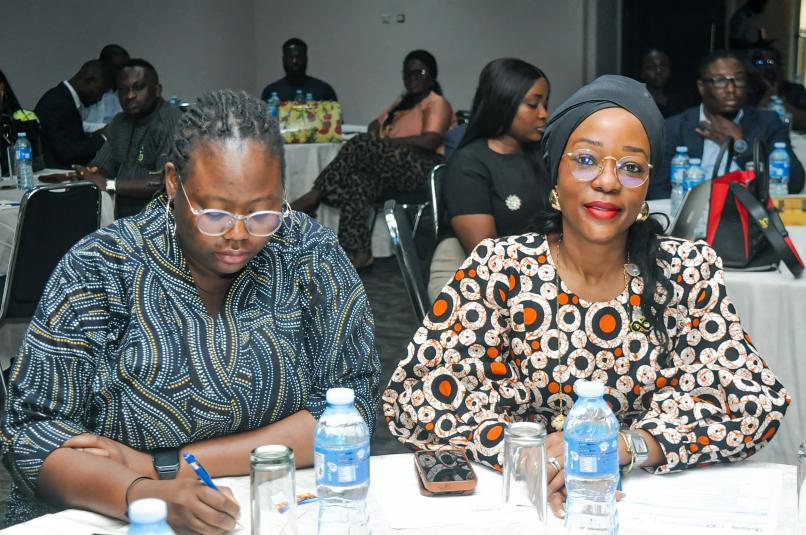
Breakout groups on Agriculture and Cold Chain, Healthcare and Vaccine Storage, and Buildings and Urban Cooling, rapidly surfaced priority actions. Agriculture discussions emphasised on cooling-as-a-service, shared cold rooms for farmer clusters, and clearer carbon-finance pathways. The healthcare group called for standardised, efficient facility designs, sustainable power for weak-grid sites, and blended finance to de-risk upgrades. In buildings, participants prioritised stronger MEPS, better compliance, and expanded technical capacity, while also identifying future opportunities such as district cooling in major urban districts.
"For Nigeria, sustainable cooling is a climate priority. This Marketplace supports the National Council on Climate Change’s mandate to coordinate action across sectors, strengthen implementation, and ensure cooling policies translate into concrete, investable solutions that deliver results on the ground" - Uboho Ekpo, Principal Scientific Officer National Council on Climate Change
Across all groups, the same “investment-grade” enablers kept resurfacing: stronger standardisation and enforcement, better data and project preparation, and financial mechanisms that reduce perceived risk—particularly guarantees/credit enhancement, local-currency financing, and blended structures that can bring in private capital at scale.
One of the workshop’s outcomes was agreement to establish a Nigeria Cooling Community of Practice, anchored by an NCCC-hosted secretariat and thematic working groups on Policy & Standards, Finance Mobilization, Capacity Building, and Sectoral Implementation. Participants proposed early deliverables including a Nigeria Sustainable Cooling Brief, sector-specific investment guides, packaged bankable projects for investor matchmaking, and impact measurement frameworks to track progress.
“Nigeria needs cooling solutions that are affordable, efficient, and scalable. This Marketplace creates a practical space to align policy, finance, and industry, turning cooling priorities into investment-ready projects with real development impact.” - Emeka Oragunye, Regional Director, Africa, SEforALL.
Looking ahead, collaborators like World Bank IFC and other participants see this first Marketplace session as the start of something larger—a practical, collaborative engine for unlocking finance and accelerating sustainable cooling nationwide. As the Community of Practice takes shape, Nigeria now has the foundations to turn concepts into investable projects and, eventually, expand the model to other efficiency priorities.


